Woodpigeons through the garden year
A familiar large bird becomes more interesting when you watch its outline, call and use of space.
An easy bird to overlook
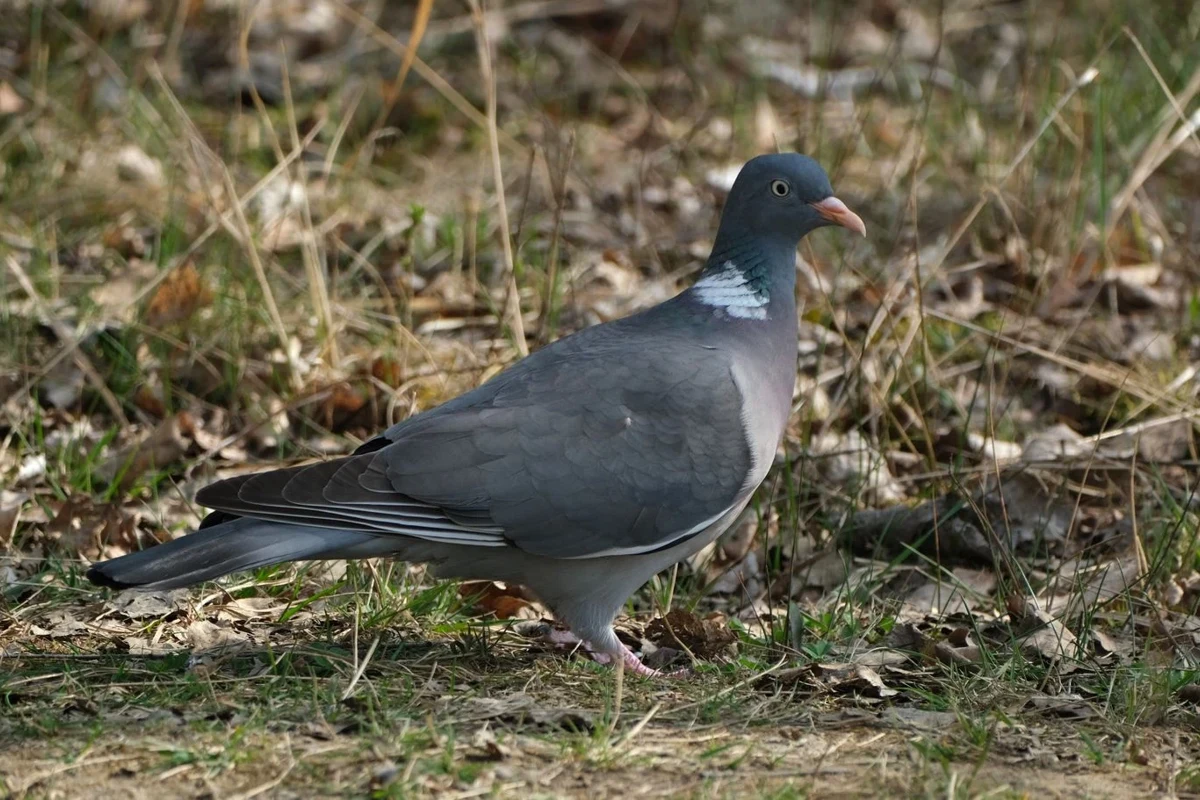
Woodpigeons are large enough to be noticed and familiar enough to be ignored. Try watching one for a little longer than usual. Its measured walking, heavy body and comparatively small head give it a distinctive shape. Adults show pale neck patches and a white band across the wing in flight. Young birds lack the adult neck patches, so their absence needs context.
A bulky grey pigeon without a visible collar is not automatically a feral pigeon. Wait for the wing pattern, consider size and shape, and use a guide that includes young birds. The best feature may appear only when the bird leaves.
Learn the phrase rather than a mnemonic
Woodpigeon cooing is often remembered through words fitted to its rhythm. Make up your own if that helps, but listen to complete repeated phrases. A collared dove has a different rhythm, and traffic or a closed window can remove quieter parts of the call.
Try tapping the pattern on paper while listening from indoors. Mark the gaps as well as the notes. Then compare reference recordings later. This keeps the exercise about the actual sound rather than whether a bird happens to fit a phrase someone else has suggested.
Large birds use small spaces
A woodpigeon balancing in a shrub can seem too heavy for the branch. Notice how it shifts position and reaches for leaves or fruit. Keep your account descriptive: the branch bent, the bird moved towards its tip. There is no need to assign clumsiness or intent to every movement.
If you grow vegetables, a sighting may also prompt questions about protecting crops. Any protective netting must be properly fitted and checked so wildlife cannot become trapped. Loose, discarded mesh is not a harmless garden accessory.
Woodpigeons can nest over a long period, so do not assume a late date makes tree or hedge work safe. Watch for activity and seek appropriate advice before disturbing a suspected nest. From a garden chair or window, there is plenty to see without inspecting the branches that support it.
A young pigeon without a neck patch
When an apparently familiar pigeon lacks the white neck marking, first consider the view and then age. A turned head can conceal an adult patch, while a juvenile may genuinely lack it. Look for the overall bulk and the pale wing band rather than making the collar an absolute requirement. A bird on a branch with its feathers puffed out may also look larger than one standing sleekly on the ground.
This is a useful reason to keep more than a close head portrait. A photograph including the folded wing and tail gives an identification helper several features to compare. Add whether the bird was accompanied by other pigeons, but do not assume those neighbours establish its identity.