Seeing the colours in a starling
Changing light and changing feathers explain why one species can look glossy, spotted or plain brown.
Wait for the light to change
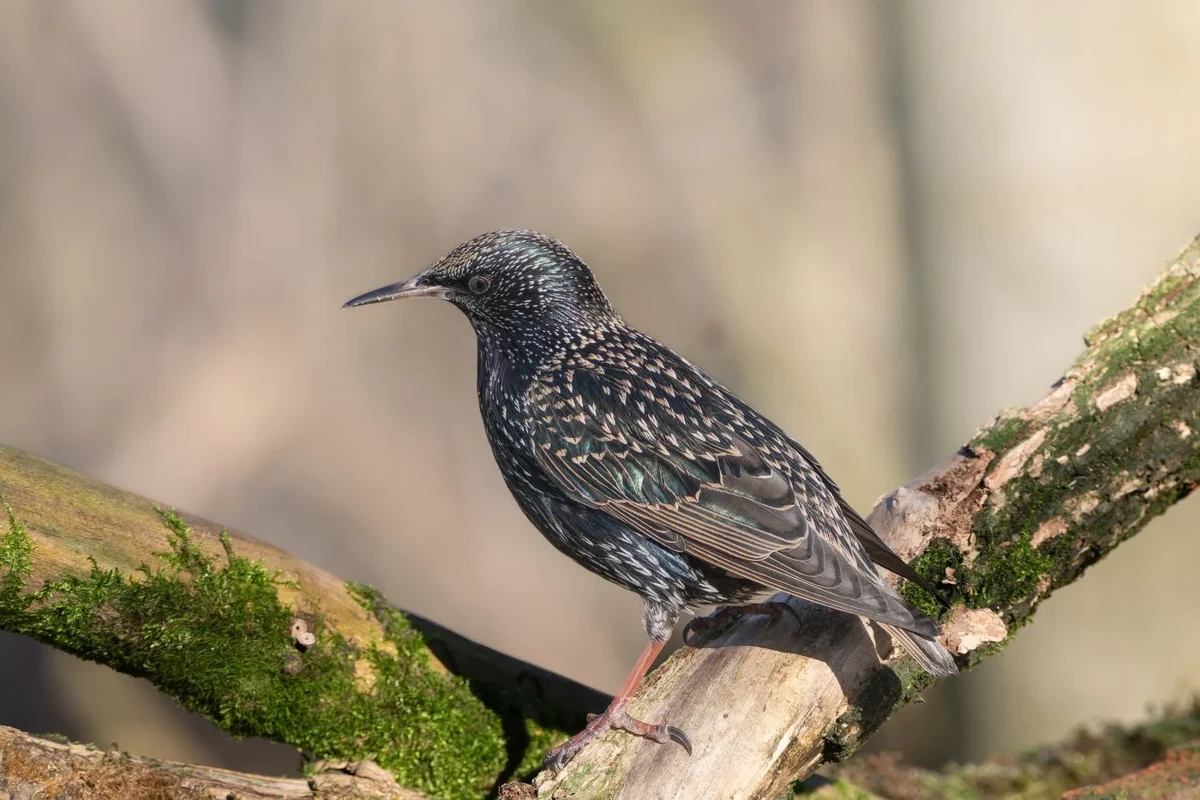
A starling on a roof can look almost black. A small turn may reveal green and purple sheen across its feathers, then lose it again. That change is an effect of the viewing angle and light, not a different bird arriving. Watch one individual move through a few positions before deciding what colour it is.
The compact body, short tail and pointed bill help distinguish a starling from a blackbird. On the ground it often walks purposefully rather than presenting the same stop-and-hop impression. These clues are useful when the light hides the plumage altogether.
Spots belong to a season
Fresh plumage can show many pale spots, particularly conspicuous in winter. As feathers wear, the appearance changes. Juveniles begin with a much plainer brown look and can pass through a patchwork stage as adult-like feathers replace the earlier ones. A brown head attached to a speckled body is therefore not automatically an exotic species or an injured bird.
If a puzzling bird returns, take notes over several days without claiming to recognise the same individual unless you have a reliable marker. Describe the distribution of brown and spotted feathers. A series of observations can explain the appearance more effectively than one heavily enlarged photograph.
Listen without trusting every imitation
Starlings make a wide range of whistles, clicks and other sounds, and they can mimic. An unexpected call from a roof should prompt a look at the singer before you record a rare visitor. An identification app may also be confused by a convincing imitation or background noise.
Try making a short recording that includes several phrases rather than one isolated note. Save the time and location with it. Listen later through headphones and compare it with what you saw. If the bird was visibly singing, note that evidence; if it was merely nearby, keep the distinction clear.
A flock is not the whole population
Large gatherings can make starlings seem universally abundant, yet the species has experienced a substantial UK decline. A noisy group in one garden and a long-term population trend are different kinds of information. Enjoy the local spectacle without using it to dismiss broader monitoring.
When counting a group, begin with a minimum you can defend. Birds moving between the lawn and a roof can otherwise be added twice. If the flock is too mobile, describe the estimate as approximate. Observing how it uses the space can still be worthwhile when an exact count is impossible.
During nesting, keep clear of repeated flight routes into buildings. The opportunity to watch from a window is enough; checking a cavity or positioning a camera beside its entrance can interrupt adults carrying food.
Counting a moving lawn flock
For a small group, choose a fixed edge of the lawn and count across it in one direction. If birds keep crossing your count line, stop and try again when they settle. Repeatedly adding new arrivals while forgetting departures creates a total that may never have been present together.
For a larger flock, an honest approximate number can be more useful than an unsupported exact one. You might estimate in groups, while noting that movement and partial concealment limited the count. A photograph can sometimes help later, but only for the birds actually visible in that frame. It cannot establish how many were hidden behind a shrub or arrived after the shutter closed.
Keep that estimate separate from a survey count unless the scheme permits the method. The same flock can be an enjoyable spectacle, a behaviour observation and a counting challenge, but those purposes do not have to produce one all-purpose number.