A collared dove on the roofline
Its pale outline and repeated cooing make a roofline worth a second look.
A slim shape above the garden
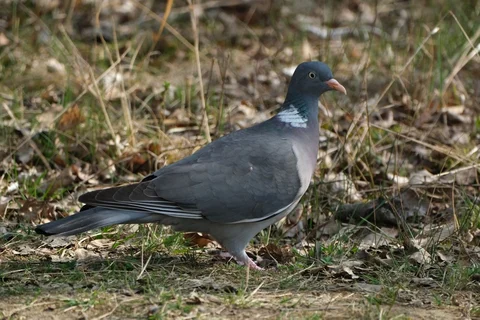
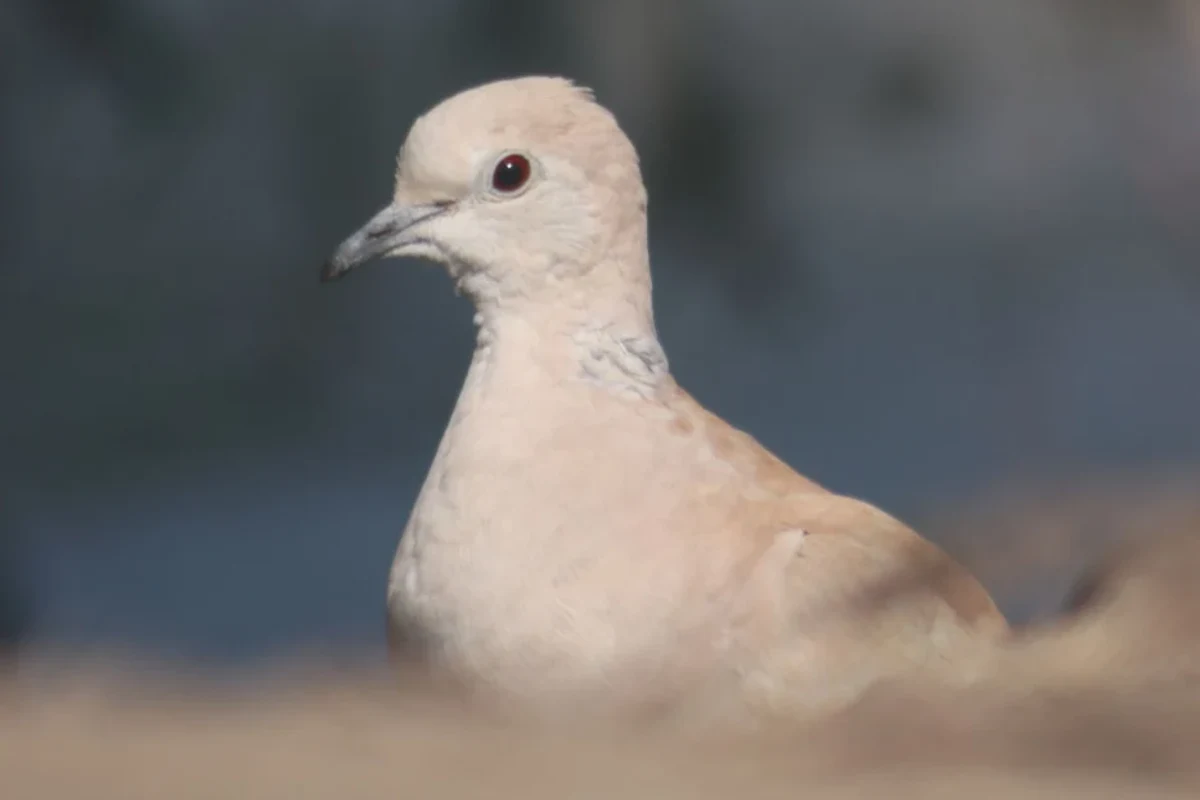
A collared dove is a more slender bird than a woodpigeon, with pale grey-brown plumage and a long tail. The narrow dark half-collar at the back of the neck is a useful adult feature. It may be invisible when the bird faces you, and young birds do not show it in the same way. A missing collar in one view is therefore not a complete answer.
Watch the bird turn on a roof edge or branch. That often reveals both the neck marking and the proportions. In bright light, pale plumage can become almost featureless in a photograph; trust a careful live view more than an overexposed image.
Separate the two common coos
Collared doves and woodpigeons can both provide a background to a quiet morning. Listen for the collared dove's repeated three-part phrase, then compare it with the longer woodpigeon pattern. The pause between phrases matters. If you start listening halfway through, it is easy to group the notes incorrectly.
Write the rhythm as a few short and long marks, or make a brief recording from where you already are. There is no need to move under the bird. Listening to a reference indoors afterwards avoids turning the exercise into a playback response.
The roof is only part of the route
Note where the bird goes after leaving its perch. It may use a tree, a lawn or another roof beyond your view. A pair of birds seen together does not establish that every later visitor is one of those same two. Keep individual identities out of the record unless there is a reliable distinguishing feature.
If birds repeatedly carry twigs towards a structure, avoid inspecting it. Work on buildings and vegetation should account for active nests, even when the nest itself is hard to see. A distant observation of repeated journeys is enough to justify caution.
For a simple notebook exercise, draw the roofline and mark the favoured perches across a week. You may discover that one sheltered position is used repeatedly while an apparently similar one is ignored. The map records a choice the birds made without needing you to alter their surroundings.