Keeping a shared bird bath clean
Fresh water and a clean vessel are separate tasks. Replacing the contents does not remove the film on the surface.
First consider whether extra water is needed
Current BTO guidance says an additional water source is generally unnecessary where a suitable shallow-edged pond is already available, unless it dries or freezes. Look at what the birds can actually reach, not simply whether there is water somewhere on the property.
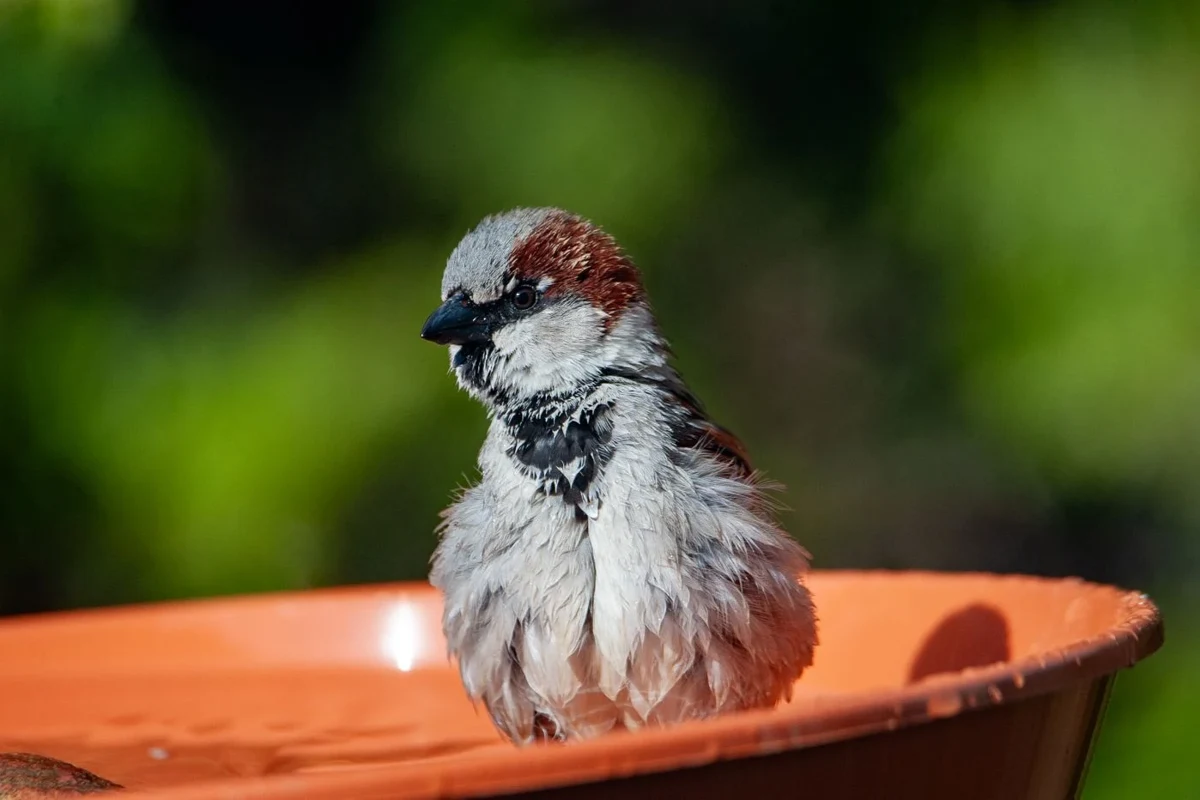
If you provide a bath, choose a vessel you can lift, empty and scrub. An ornamental bowl too heavy to maintain can become a permanent cleaning problem. Stable footing and accessible shallow edges matter as well as appearance.
Empty, then refill
Replace the water daily rather than adding a fresh splash to yesterday's contents. Remove leaves, droppings and other visible debris. Look at the rim and surface as well as the centre, since birds contact more than the water itself.
Use fresh clean water and consult current local guidance about the supply. RSPB generally recommends tap water but gives particular advice for chloraminated supplies and ground-level baths. If this applies to you, check your water company's treatment information and the linked RSPB guidance rather than assuming tap water and collected rainwater are always interchangeable.
Schedule a proper wash
A weekly clean and disinfection, followed by thorough rinsing and drying, is the routine advised by current guidance. Extra cleaning may be needed when the bath is visibly soiled. Use dedicated outdoor equipment and a suitable product according to its instructions.
Do not scrub the vessel in the kitchen sink or use the household washing-up brush. Keep gloves and tools apart from food preparation, wash your hands afterwards and prevent pets drinking from the container while it is being cleaned.
Make the design work for you
Before buying a bath, imagine carrying it to the cleaning place. A detachable bowl can be easier to manage than a deep fixed basin. Avoid inaccessible crevices where residue remains despite repeated rinsing.
Position it so you can see whether the water has become dirty and can reach it without trampling a dense border. Do not put it beneath a favourite roosting branch where droppings repeatedly fall into it. A quiet setting is useful, but hidden equipment is easily forgotten.
During freezing weather, do not add salt, antifreeze or other chemicals. Use an appropriate safe way to replace frozen water and avoid sudden temperature changes that may crack the vessel. A damaged bowl with sharp edges should be removed from use.
A holiday or busy-week decision
Consider a week when nobody can change the water each day. Filling a deeper container does not preserve the same care standard; it simply leaves more water outside. Ask a reliable helper to follow the routine, or review whether supplementary water should be paused, taking account of the natural water available and current advice.
If a helper agrees, show them how the bowl lifts off its stand and where to put it down safely. A heavy slippery vessel can be dropped during an unfamiliar task. Leave the dedicated equipment ready and make the illness instructions clear. The important handover is how to keep the source suitable, not just the location of the tap.
Illness requires a different response
If birds appear unwell, follow outbreak guidance rather than continuing the normal refill routine. Garden Wildlife Health advises leaving baths empty until no further sick or dead birds are seen. An attractive source of water can also be a place where birds share infection.
Keep a simple reminder for the daily change and the fuller clean. The aim is not a permanently full garden ornament but a source that stays suitable whenever it is offered. If the care cannot be maintained for a period, reassess whether the extra bath should remain in use.