Using suet without leaving it to spoil
Choose a manageable portion and a suitable holder, then let temperature and leftovers guide the next serving.
Read what is in the product
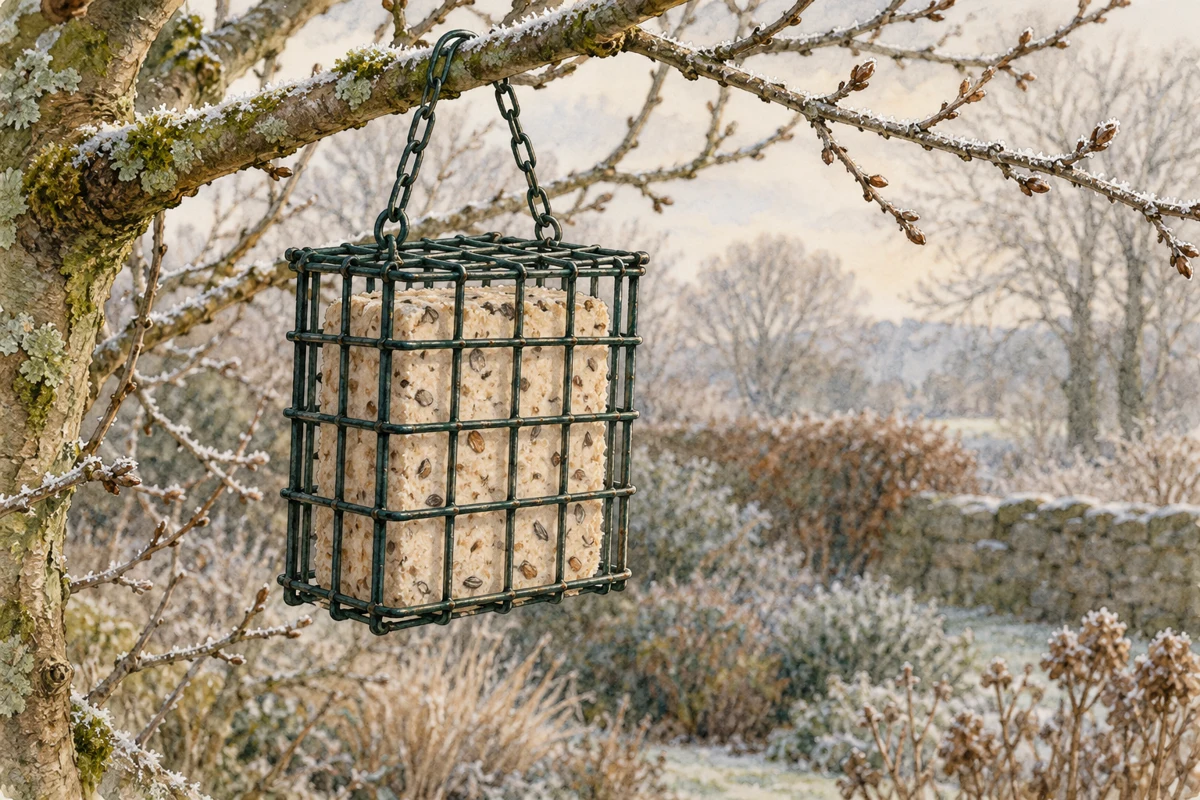
Suet foods come as blocks, balls, pellets and mixtures. These forms need different holders, and their ingredients vary. Check the label rather than treating every item sold beside a feeder as interchangeable.
Current advice allows suitable suet in moderation beyond the seed-feeding season. If a product contains substantial seed or peanuts, however, do not assume its suet label makes those ingredients irrelevant. Choose an appropriate product for the season and consult the current guidance if the formulation is unclear.
Use a holder without loose netting
Place the food in a suitable purpose-made holder, removing disposable mesh wrapping where supplied. Loose netting is not a feeder design to leave hanging in the garden. Inspect the holder for sharp edges, broken wires and a closure that can open unexpectedly.
A large cage does not need to be packed full. One manageable portion is easier to inspect than a pile in which the oldest pieces are hidden. Keep track of when it went outside so a gradual change in appearance does not become invisible through familiarity.
Warm weather changes the task
A product that remains firm on a cold morning may soften in afternoon sun. Follow its storage and outdoor-use instructions and avoid homemade fat mixtures in hot conditions. If it becomes greasy, spoiled or difficult to keep clean, remove it rather than waiting for birds to finish it.
Choose a sheltered position where you can reach the holder easily. Do not move it into a dense tangle simply to obtain shade if that makes inspection and cleaning impractical. A smaller serving, or a pause, may be the better answer.
Clear the residue as well as the food
Fatty fragments can cling to wires and corners after the visible block has gone. Dismantle and clean the holder so those remnants do not become the base of the next serving. Follow product-compatible cleaning guidance, rinse and dry before reuse.
Check the ground below for pieces too. Offering suet in a hanging cage does not guarantee every fragment stays there. If waste recurs, reduce the portion and review the design.
The purpose is supplementary food that can be managed while fresh. There is no benefit in keeping a permanent reserve outside to make the holder look well stocked. Let the condition of the food and your ability to care for it determine whether another portion goes out.