A brief visit from a bullfinch
A white rump or a soft call may be the first clue to a bird that stays close to cover.
The glimpse before the colour
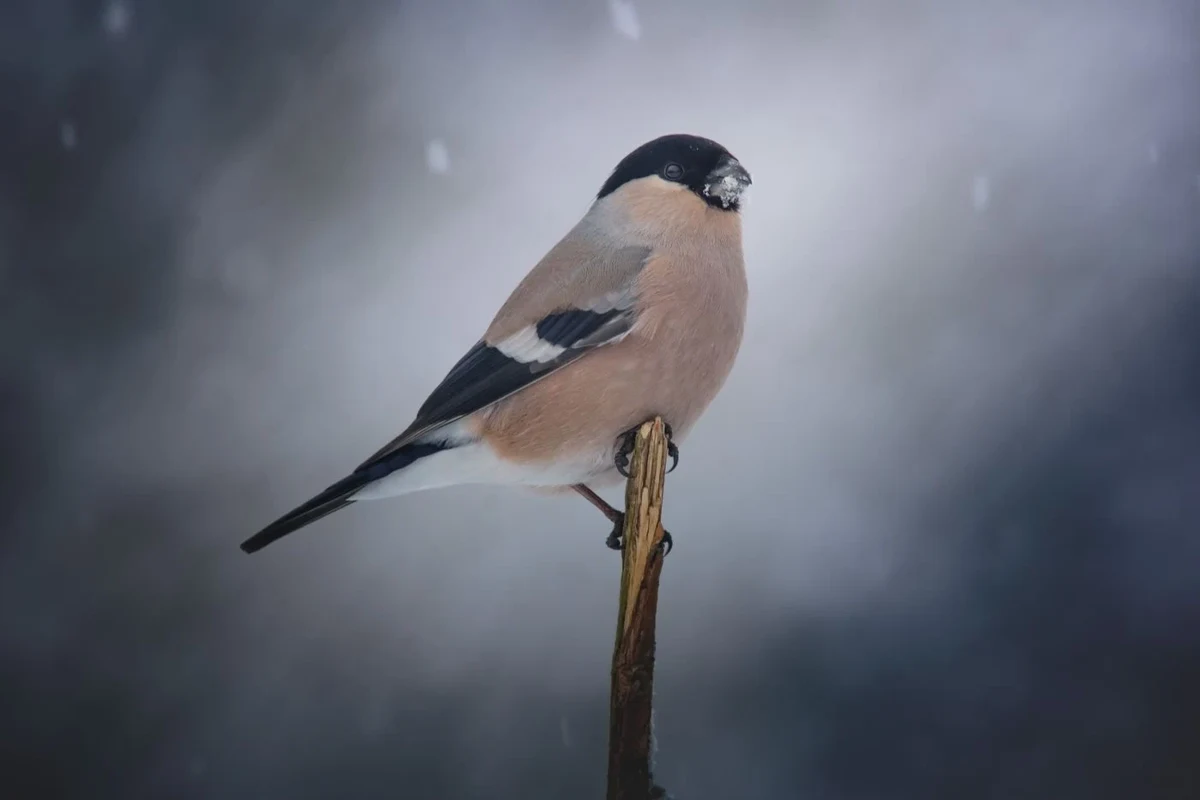
A bullfinch does not always introduce itself with a clear view of the male's pink-red breast. You may see only a white patch above the tail as it slips away, or hear a soft piping call from the hedge. Pause where you are. A second bird may still be present, and remaining still is often more productive than following the first.
Both sexes have a stocky outline and a short, deep bill. The female's underside is much more subdued than the male's, but the dark cap and bright rump remain useful features. A partly hidden bird may show only one of these, so keep the identification provisional until the view improves.
Watch the plant it has chosen
Bullfinches use woodland edges, hedges and gardens, taking foods that include buds. If a bird appears to be working along a branch, notice what it actually touches. Does it pick at the tips or search among leaves? A pair of binoculars may reveal the action without revealing the tiny item involved.
A useful garden record might name the tree and describe the movement rather than simply say feeding. That distinction matters if you are trying to understand why visits cluster at a particular time of year. One brief encounter cannot tell you how much a bird has eaten or what effect it has on the plant.
Keep the encounter quiet
Bullfinches can be unobtrusive, and a close approach may end the sighting before you have learned much. Choose an existing view through a window or from a path. Do not clear foliage or play calls to persuade a hidden bird to emerge.
If you take a photograph, accept some branches in the frame. They show the setting in which the bird chose to remain. Cropping later can make the visible details easier to examine without changing the encounter itself.
When the bird leaves, write the strongest two or three features immediately. Memory tends to retain the impressive colour and lose the more useful outline. White rump, dark cap and short heavy bill make a better identification note than beautiful red bird, particularly when the next visitor is a female.