Listening for a song thrush
Repeated phrases and a warm brown back are useful clues, especially when the singer stays high above you.
Hear the repetition
A song thrush can make a hedge seem much more densely populated than it is. Its song moves through a series of phrases, often repeating one before changing to another. Listen to the pattern rather than counting every new phrase as a different bird. When possible, locate a visible singer and check that its bill movements coincide with the sound.
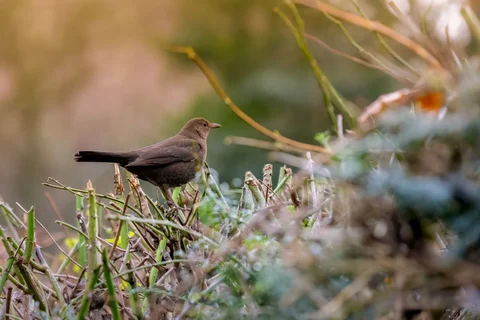
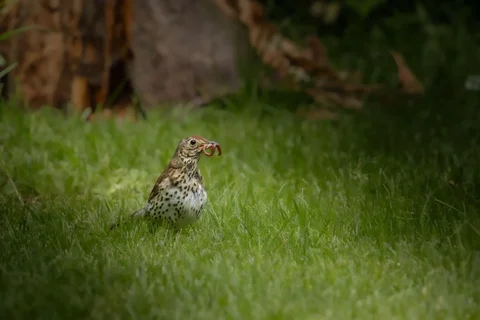
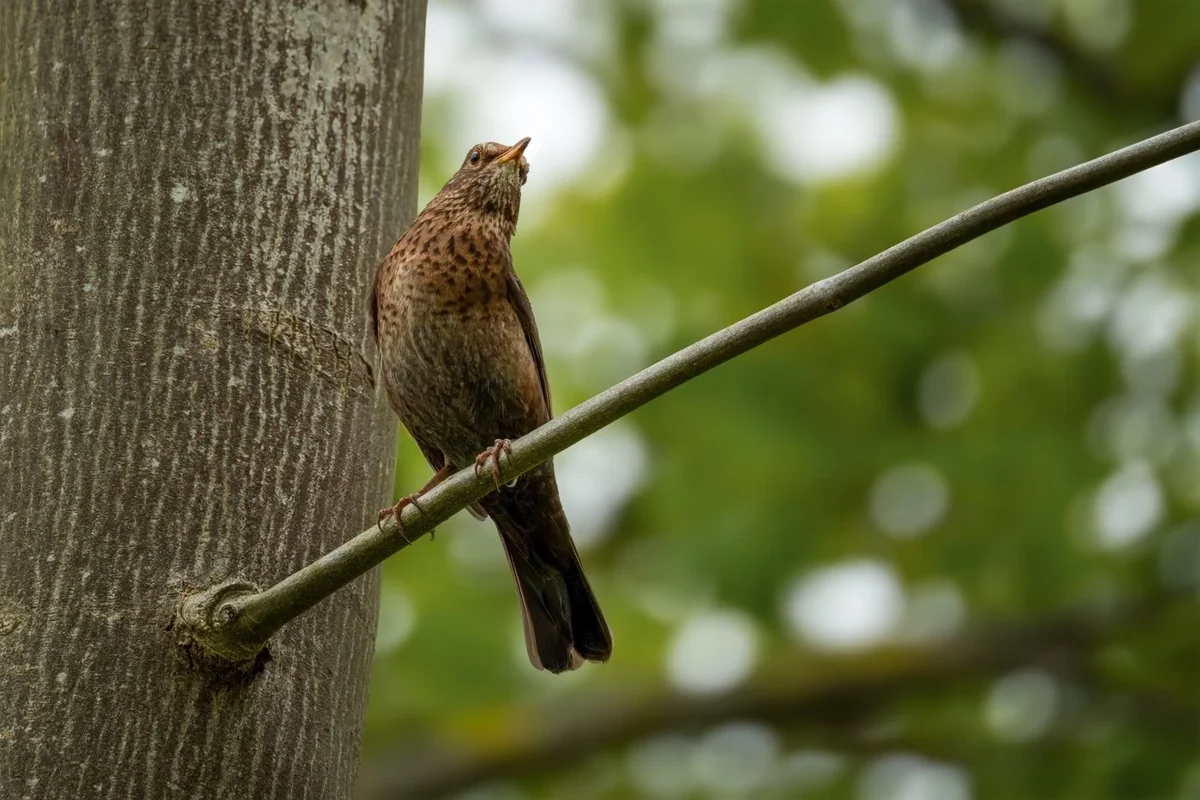
The bird itself is warm brown above, with dark markings on a pale breast. It is smaller and generally warmer-toned than a mistle thrush. If the breast is hidden by a branch, wait for a turn instead of relying on brown plumage alone. A female blackbird can also appear brown and marked, particularly in an indistinct photograph.
A listening exercise for one garden
Choose a fixed place and spend a short period listening without trying to name everything. Draw a mark each time the singer changes phrase. Leave spaces for pauses. The result need not resemble musical notation; it is simply a record of how the song is organised.
Later, compare the pattern with a reference recording at a low volume indoors. The question is not whether every note is identical. Individual birds and recordings differ. What matters is whether the repeated-phrase structure fits, alongside the bird's appearance and setting. If another species interrupts, mark that separately instead of trying to untangle it from memory afterwards.
Watch the ground as well
Song thrushes also search for invertebrates at ground level and may break snail shells against a hard surface. Broken shells near a stone can be an interesting clue, but they are not a substitute for seeing the bird use it. Leave the area as it is and watch from your usual position rather than arranging snails for a photograph.
A garden with places to search can be more relevant than a garden with an elaborate feeding station. Note the use of damp borders, fallen leaves and open soil. Those details give you something concrete to consider when deciding which corners can be left less intensively managed.
Do not follow a food-carrying bird into shrubs. The route can be noted from a distance without discovering its destination. The most useful record may be a few lines about a song, a feeding place and the date, rather than a close view of an active nest.