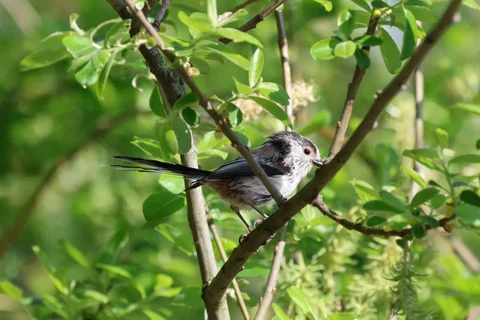
Blackbirds on the lawn and under the hedge
The lawn, leaf litter and the top of a tree offer three quite different views of the same species.
A pause on the lawn
A blackbird often reveals its feeding rhythm before it reveals its food. A short movement, a pause, a head turned towards the ground: the sequence is worth watching without trying to explain every action. From a window, follow a single bird across one section of lawn. Does it stay in open grass or repeatedly return to the border? Is the soil damp, hard or hidden under leaves?
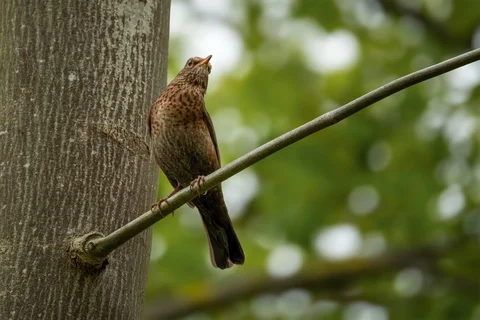
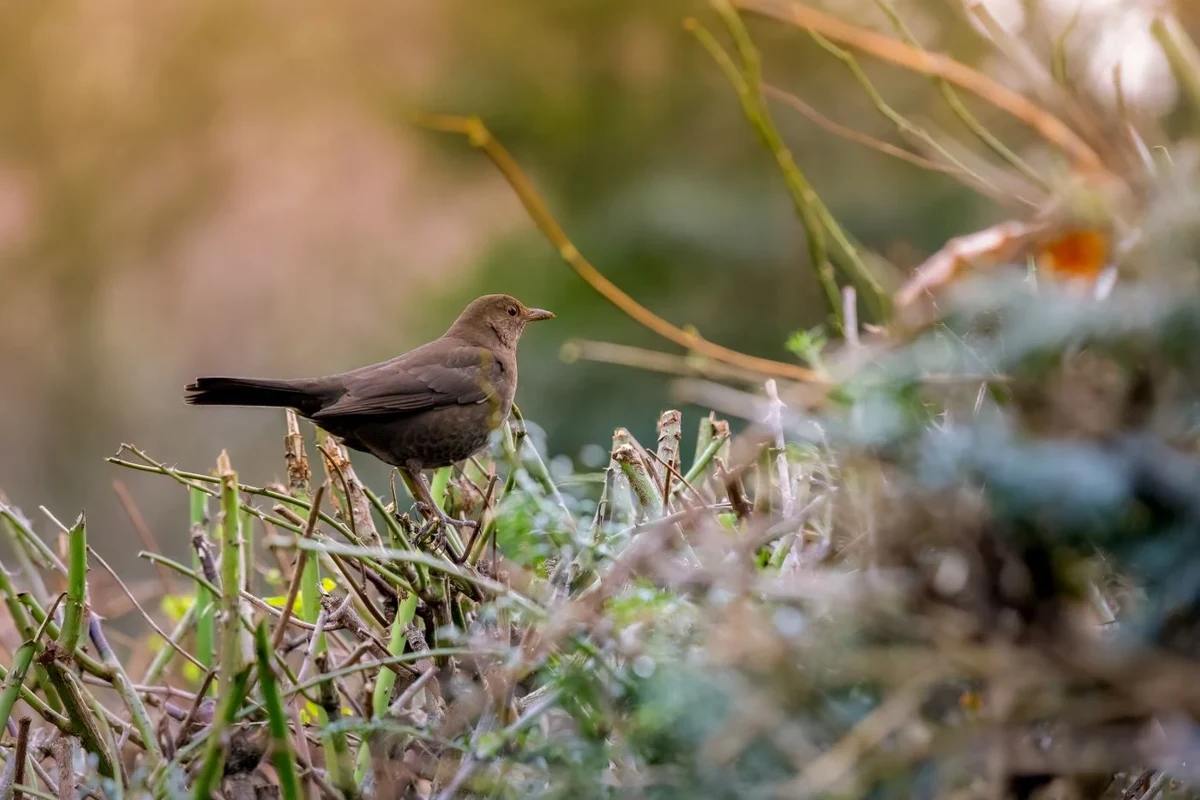
Adult males are dark with a yellow-orange bill and eye ring, while females are brown and can show mottling. Young birds are also brown and patterned. An unfamiliar brown bird beside a black male is not automatically a different species. Shape, size and behaviour help, but a clear view of the breast and head is useful before deciding its age or sex.
There is more food under the hedge
Blackbirds search leaf litter as well as grass and also take fruit. A border can therefore be worth watching even when the lawn appears empty. Leaves flicking or rustling may reveal a bird that is otherwise concealed. Observe from the edge rather than lifting the branches for a better view.
If you keep a garden diary, divide the space into a few simple areas: lawn, hedge base, shrub bed and tree canopy. Mark where each sighting happened. After several weeks, this gives a clearer account of how the garden is used than a series of identical entries saying blackbird present. It may also stop you tidying away the very patch that produces the most activity.
Do not assume every bird occupying a favoured corner is the same individual. Residents can be joined by birds from elsewhere, including continental visitors in the colder months. Recognising a location is much easier than recognising an unmarked blackbird.
Compare the view above and below
A singing male high in a tree seems far removed from a bird turning leaves at ground level. Listen for a relaxed sequence of musical phrases, and distinguish it from the sharper alarm sounds. The posture and context help: a bird singing from an exposed perch is doing something different from one calling urgently near cover.
Keep your distance if alarm calling persists as you approach. There may be a cat, another bird or a hidden nest nearby; the cause is not always visible. Standing still to investigate can itself prolong the interruption. Moving away is often the more useful response.
What a quiet spell can mean
Late-summer blackbirds can be much less conspicuous as they moult, and food availability also changes where birds spend their time. A few empty mornings do not establish a local loss. Compare observations made with similar effort and at similar times, and keep disease concerns separate from simple absence.
If a bird looks persistently unwell, consult current wildlife health advice rather than treating it yourself. But a brown youngster being fed beneath the hedge is a normal part of the garden year. Keep pets away and allow the adults to continue without an audience close beside them.