A shallow edge on a wildlife pond
For a bird approaching water, the edge matters more than the view from the patio.
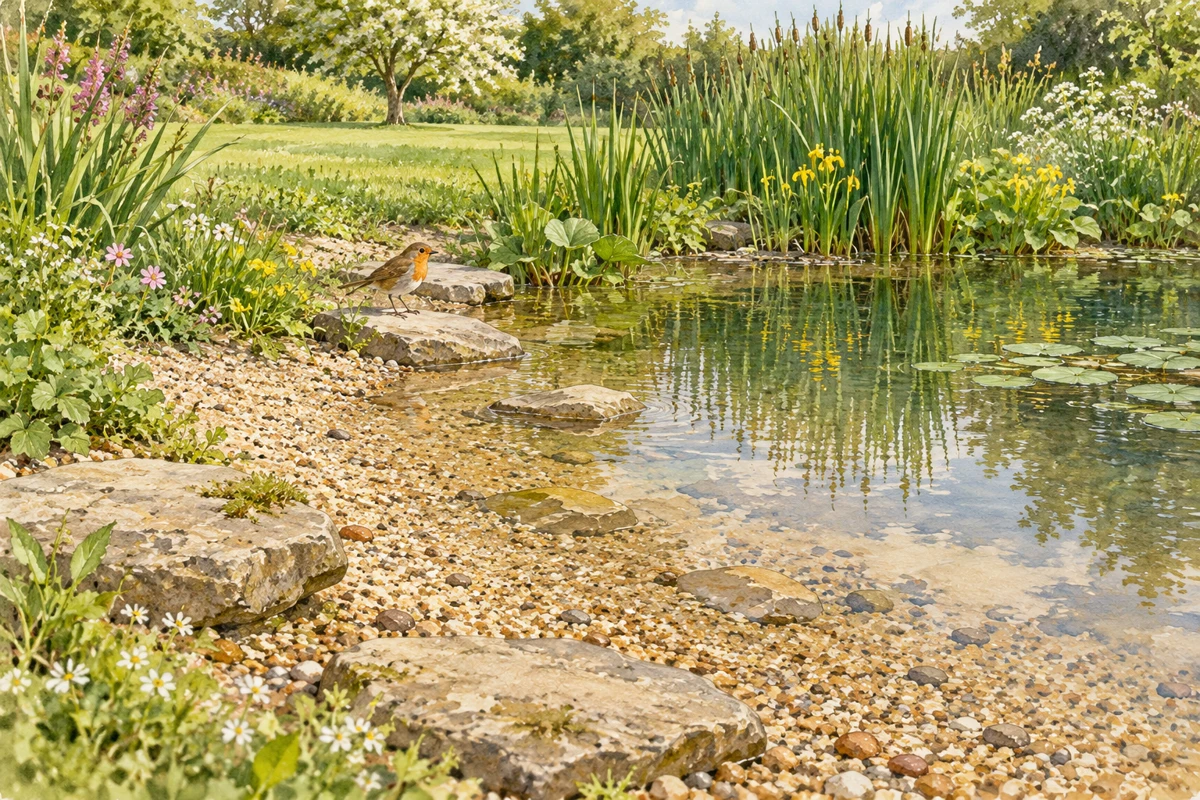
A steep-sided container can hold water beautifully while offering an awkward place for a small animal to stand. When planning a wildlife pond, begin with how creatures will get in, reach shallow water and get out again. The deepest part is only one feature of the design.
The RHS recommends gently sloping access and attention to the margins. In a small garden, it is tempting to maximise the visible water by making every side steep. That can sacrifice the very shallows where much of the useful activity takes place. A broad, gradual edge deserves space in the plan.
Check the site before digging
Consider access for maintenance, the position of underground services and the safety of children or others using the garden. Water features require a site-specific safety plan. A wildlife aim does not remove the risk posed by even a small amount of water. If an open pond is unsuitable, choose another habitat feature rather than trying to hide the problem with planting.
Look at runoff too. Water flowing from fertilised beds or treated surfaces can carry unwanted material into the pond. Avoid a position that collects whatever washes off the busiest part of the garden. The best-looking low point may not be the best place for water quality.
Make the margin stable
Any stones or access ramps should stay secure when wet and when the water level falls. A loose stack that rocks under a bird is not a reliable landing place. Consider how an animal would leave from more than one position rather than providing a single narrow escape point on an otherwise sheer container.
For a raised container pond, access needs thinking about outside as well as inside. A ramp into the water does not help an animal reach the rim in the first place. Nor should vegetation be relied on as a permanent escape route if it will die back or be cut during maintenance.
Leave some edge open enough to observe without leaning over it. A seat at a distance can be more useful than a path immediately around every side. Birds approaching water need the option to leave, and other wildlife benefits from a margin that is not constantly trampled.
Keep pond care separate from bird-bath care
A wildlife pond is a developing habitat, not a bowl to empty and disinfect each week. Avoid applying a bird-bath cleaning routine to an occupied pond. Seek pond-specific advice about excessive algae, invasive plants or water quality, and make changes gradually where appropriate.
Do not move wild animals or plants from another pond to stock it. Use responsibly sourced suitable plants and allow wildlife to arrive. A newly filled pond need not look established immediately. Much of its early development is easy to miss if you judge it only by whether a bird has bathed in it.
Watch the water line
Take photographs after rain and during drier weather. Is the access still shallow and usable? Are formerly submerged edges exposed and slippery? This is where the original design is tested. If the margin needs adjusting, plan the work around the wildlife using it rather than treating every level change as an emergency.
Where birds already have access to a suitable shallow-edged pond, current BTO guidance says an additional shared water bowl is generally unnecessary unless that source dries or freezes. More containers are not automatically better. A well-considered water feature, maintained in a way that suits it, can be enough.