Making reflective windows easier to see
Treat the surface birds see from outside, and cover the risky area rather than adding one token sticker.
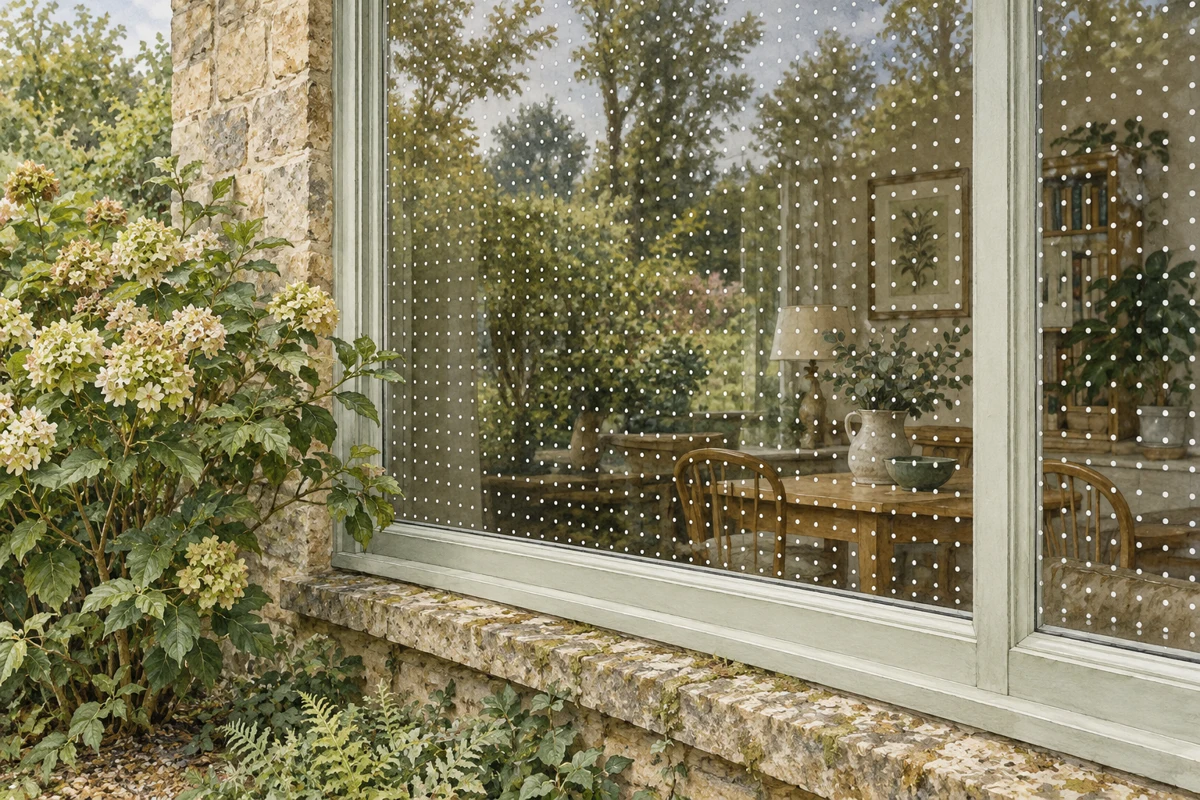
A window can look like an opening even when the room behind it is dark. Reflected trees and sky may appear to continue the garden; glass corners can offer a convincing view straight through a building. Birds do not need to be careless to misread that surface.
Start outside. Look at the window from the routes birds use, at different times of day. The strongest reflection may not be visible from your chair indoors. A pane that seems harmless in morning shade can become a mirror later.
Find the whole problem area
Check patio doors, glazed side panels, conservatories, transparent barriers and garden mirrors as well as ordinary windows. A mark on one central pane will not address a clear flight line through an adjacent panel. Note any collision evidence, but do not wait for repeated injuries before considering prevention.
If you are planning new glass or major building work, investigate bird-conscious design at that stage. Retrofitting can help existing windows, but design choices made before installation may avoid a harder problem later. Discuss options with a qualified supplier and check evidence for any product's claims.
Make the barrier visible
The American Bird Conservancy publishes guidance on tested treatments and the importance of closely spaced patterns. For many applied patterns, gaps should be no more than about 5 cm in both directions. Use a proven treatment's instructions for the specific design rather than spacing decorative shapes by eye.
Treatments generally need to address the exterior surface where reflections occur. An internal sticker can be hidden by the reflection outside. One large bird silhouette in the middle of a broad pane leaves most of the apparent opening unchanged; the aim is to mark the area as a barrier, not to suggest a predator is sitting there.
There are different approaches, including suitable external screens, films and markings. Consider visibility, cleaning, durability and safe installation. Do not lean out of an upper window or improvise access to fit a product. Get help where the glazing cannot be reached safely, and obtain permission for shared or rented buildings.
Recheck the surroundings
Indoor plants close to glass and a clear line through opposite windows can contribute to the illusion of usable space. Moving an interior plant or closing a blind may help a particular arrangement, but it does not replace treating a persistent exterior reflection. Watch the result from outside again after making changes.
Do not position a new feeder simply to test whether a treatment works. First make the hazardous surface easier to recognise, then consider the broader garden layout and current feeding advice. Concentrating activity beside unresolved glass is an avoidable complication.
If a collision has happened
Keep people and pets away and contact a wildlife rehabilitator or veterinary practice for advice about an injured bird. A bird that appears stunned can have injuries that are not obvious. Do not force food or water into it or keep it for observation as a household project.
Record the location and approximate time for your own prevention work. Avoid publishing sensitive nest locations or following a recovering bird. The most useful response after the immediate welfare concern is addressed is to change the surface that caused the problem, so the same pane does not remain a trap.