Small seeds and specialist feeder ports
Fine seed needs an appropriate port, small quantities and the same seasonal pause as other seeds.
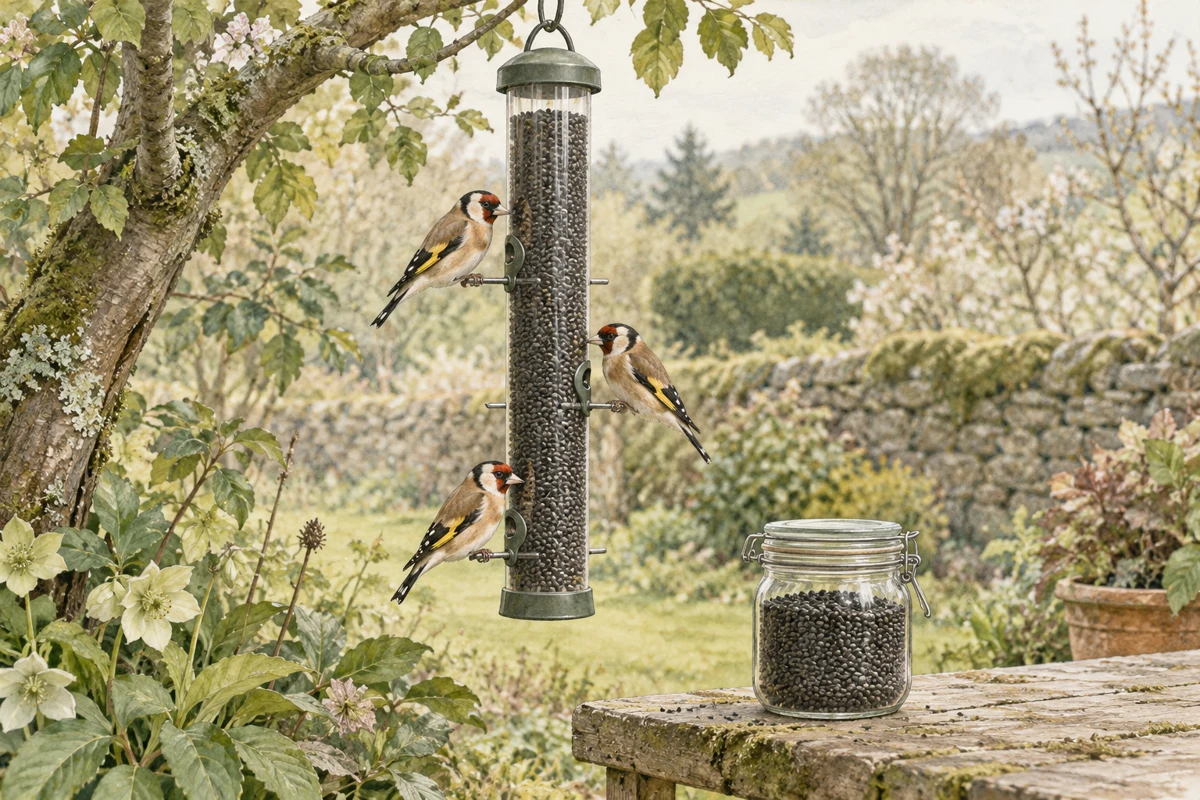
A specialist port solves one problem
Nyjer is small enough to spill through some ordinary seed-feeder openings. A feeder designed for it controls that flow more effectively. Check the stated food compatibility rather than assuming any narrow-looking port will work.
That design does not guarantee goldfinches or any other particular visitor. Birds must encounter the feeder, accept the position and have a reason to use it. Buying a specialist container is a choice about managing a food, not ordering a species for the garden.
Buy a small first supply
If you have never offered nyjer, start with a modest quantity. A large bag becomes less attractive when visits are infrequent. Keep its label and opening date, store it dry and inspect it before use. Do not keep refilling from a bag merely to avoid admitting that the garden used less than expected.
Nyjer remains seed for the purpose of current UK seasonal advice. Offer it only during the November–April seed-feeding period and pause through May–October. The specialist feeder does not create an exception to that recommendation.
Watch the contents closely
Because the seed is tiny, changes in level can be hard to judge. A dated photograph of the feeder can help you see whether food is actually moving. You do not need to mark the tube with anything that could obscure inspection or interfere with cleaning.
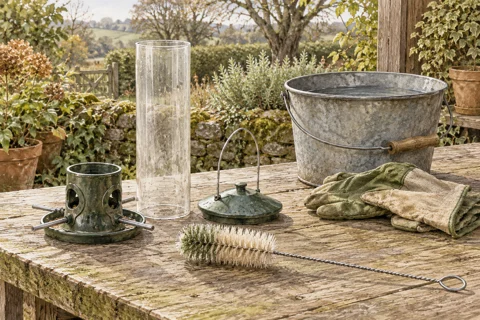
Look for damp material around the small ports and base. Fine openings can be awkward to clean, so check that the feeder comes apart adequately before buying. If a port repeatedly clogs, inspect the equipment and storage conditions rather than forcing a larger hole through it.
Do not confuse a shell with a full seed
Remnants below a feeder may include husks as well as uneaten seed. Whatever their composition, accumulated debris still needs attention. Avoid letting a dark patch develop beneath the feeding point simply because the particles are small.
Reduce the serving if food remains, and collect spills rather than adding a tray that becomes another flat feeding surface. A smaller fill can make both freshness and cleaning easier to manage.
If the feeder stays unused, it is reasonable to put it away. A garden with plants, cover and opportunities to forage does not need every type of purchased bird food on display. Specialist feeding is optional, and its care requirements should determine whether it fits your routine.