A cleaning routine for hanging feeders
A feeder should be easy to empty, dismantle, wash and dry. Build those steps into the routine before refilling it.
Set up an outdoor cleaning place
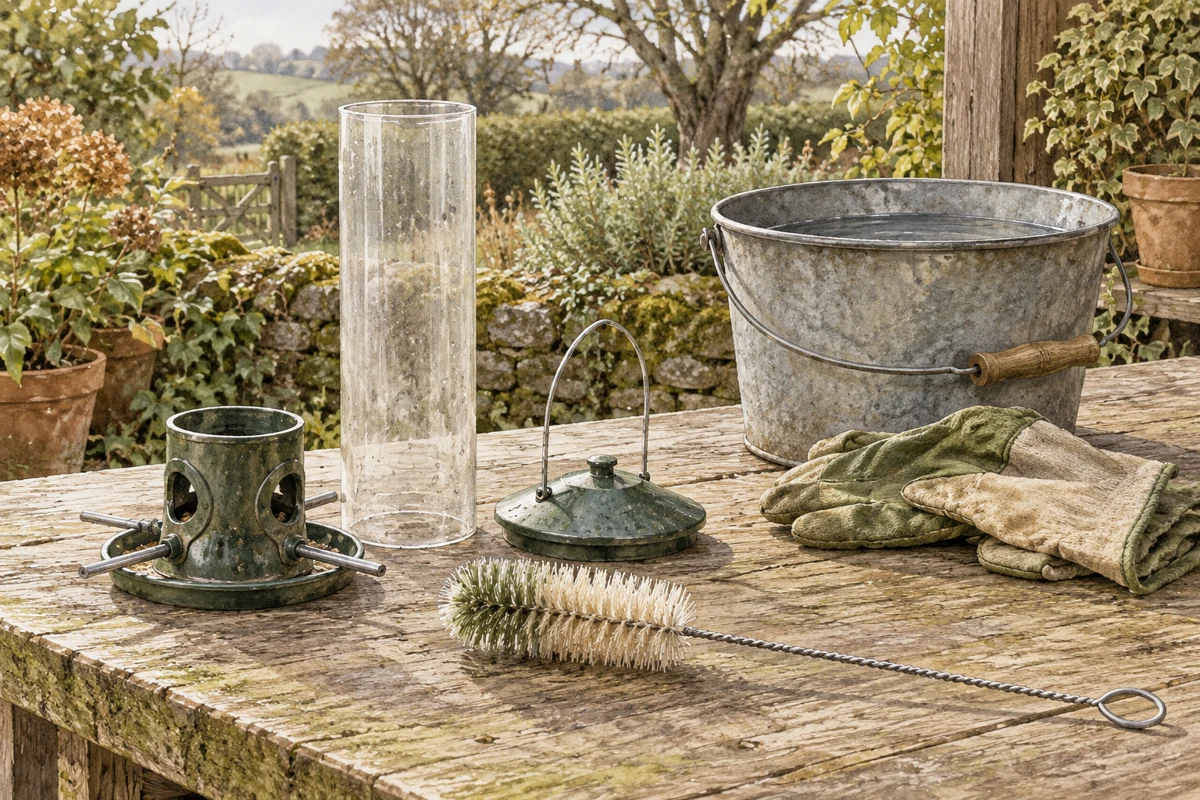
Keep a dedicated brush, container and gloves for bird-feeding equipment. Use them outside, away from household food preparation. Labelling the brush prevents it being borrowed later for a pet bowl or kitchen job.
Choose a place where small screws or clips will not disappear into grass. A tray can hold dismantled parts while you work. Keep children and pets away from the cleaning area and wash your hands after removing gloves, even when the equipment did not look especially dirty.
Empty before washing
Remove the remaining food rather than adding fresh seed above it. Pay attention to the lower ports and base, where old material can remain hidden. Dispose of waste so wildlife cannot simply find it again elsewhere in the garden.
Dampen dirty surfaces before brushing away debris rather than raising a cloud of dry dust. Take the feeder apart according to its instructions and reach the seams as well as the transparent sides. A tube that looks clear can still have compacted residue behind a feeding port.
Clean first, then use a suitable product
Follow current wildlife hygiene guidance and the cleaning product's label. Use a disinfectant suitable for the equipment at the specified dilution and contact time; do not improvise a stronger mixture or combine products. Physical dirt needs removing first, because spraying over it is not the same as cleaning.
Rinse thoroughly and allow the parts to dry before refilling. Inspect for cracks, corrosion and sharp edges while they are apart. If a damaged port cannot be cleaned effectively or safely replaced, retire the feeder rather than accepting a permanent dirty corner.
Fit the schedule to the weather
A regular weekly clean is a useful routine, with extra attention whenever food becomes wet or soiled. Waiting for the usual day is inappropriate if a feeder has filled with rainwater. Daily observation also tells you whether you are offering more than the birds use.
Having a second clean, dry feeder can make rotation easier, but it is not essential. It is fine for the hook to remain empty while the first one dries. The routine should not depend on rushing wet equipment back outside.
If a bird appears unwell
Routine cleaning is not enough during a suspected outbreak. Stop feeding and follow current disease guidance; washing and immediately refilling can keep birds gathering at the same site. Record the observation and consider reporting it to Garden Wildlife Health.
Before storing the equipment for a seasonal pause, clean and dry it fully. Pack the parts together so the next setup begins with a complete feeder rather than a missing base and an improvised replacement.