Finding a place for teasels
Allow for the rosette, the tall stem and the seeds that may follow.
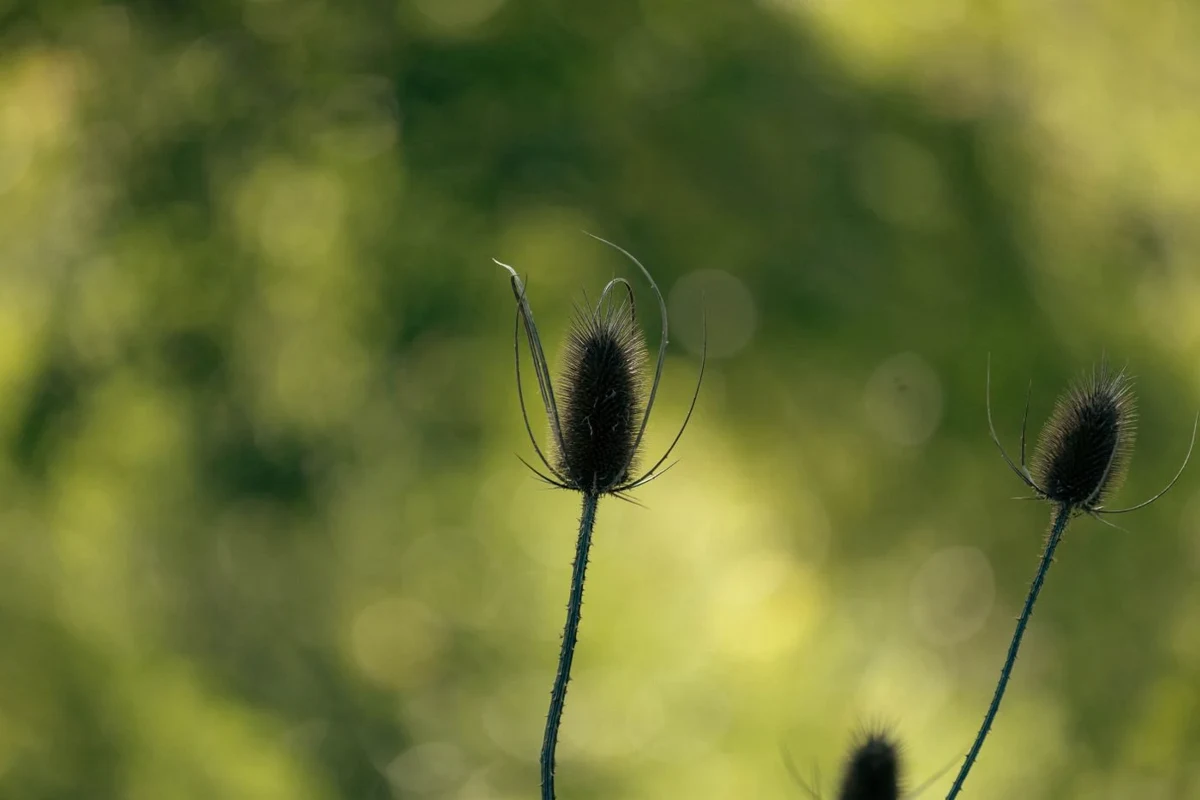
A teasel needs more space than its narrow flowering stem suggests. Common teasel usually spends its first year as a low rosette before sending up its tall flowering growth in the next. If you place that rosette where a path must remain open, the plant can become inconvenient before the familiar spiky head appears.
Choose a position where the plant can complete its cycle. A back or middle section of a sunny wildlife border may work better than a tight edge beside a door. Keep the eventual height in mind, especially where wind or leaning stems could bring the heads into a route.
Recognise the stages
The oval heads do not turn purple all at once. Small flowers form bands around them, and later the heads dry to brown. The Wildlife Trusts describes their seeds as a food source used by birds including goldfinches. That does not guarantee a goldfinch on every plant, but it gives a reason to leave the heads after flowering.
Take a photograph at the rosette stage as well as when the stem is tall. The earlier image will help you recognise seedlings rather than weeding them out automatically. It also makes the waiting period part of the plant's story instead of a season when 'nothing happened'.
Decide how much self-seeding you want
One retained plant can lead to more seedlings than a small garden needs. You can keep some heads for wildlife while managing the number of new plants in following seasons. Choose seedlings in workable positions and remove unwanted ones while they are small, rather than allowing a dense patch to develop beside a path.
Wear suitable gloves when handling the prickly stems. If a head has to be moved because a stem has fallen into a walkway, think about where it can remain without creating a new hazard. Do not push it into a busy feeding surface where waste can accumulate.
Observe from a distance when birds are using the heads. Their balancing and turning can be more distinctive than the brief view of a face. A quiet five-minute watch often tells you more than repeatedly approaching for a close photograph. The plant has already provided the setting; it does not need to be rearranged around the camera.