A larger box for starlings
A starling needs a purpose-sized chamber, not a tit box with its doorway drilled wider.
Scale up the whole design
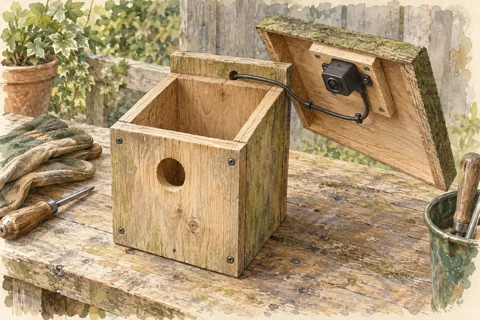
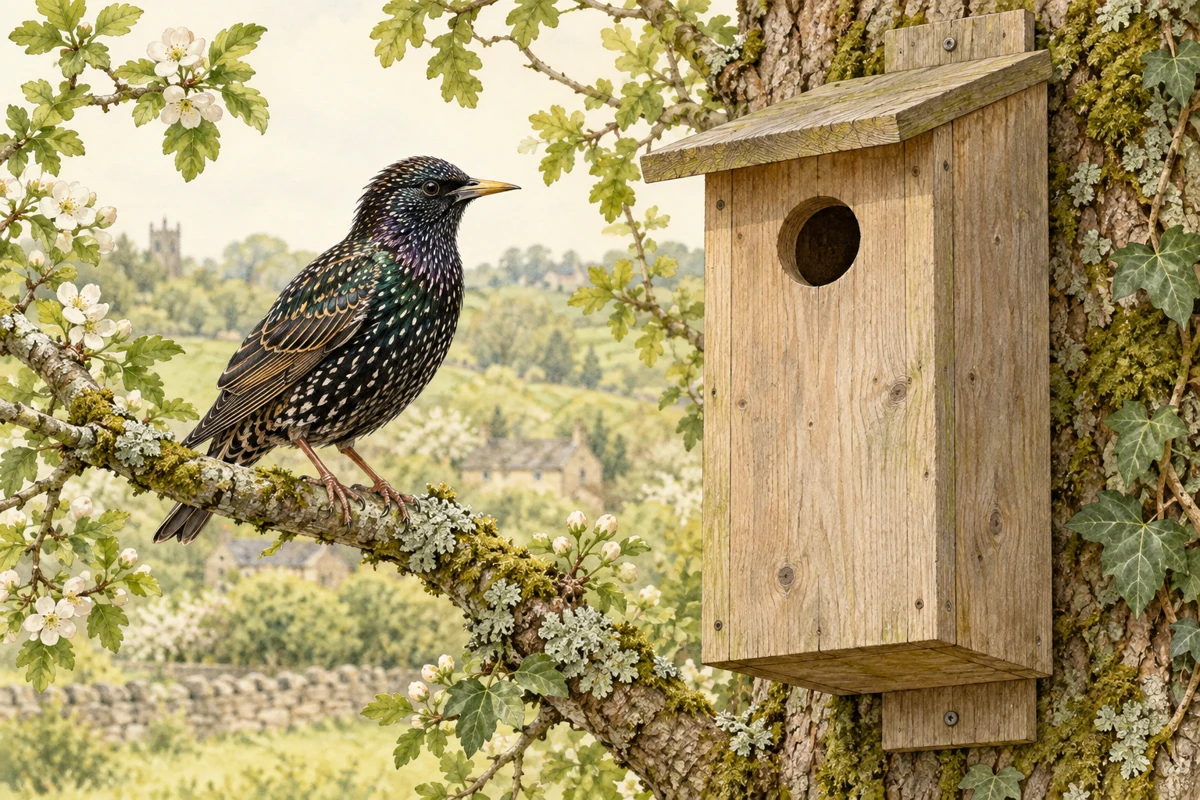
A starling is a larger cavity-nesting bird than a blue tit. Enlarging the hole in a small box changes access without increasing the room behind it. Start with a recognised starling plan or a manufactured box clearly specified for starlings.
BTO gives 45 mm as a starling entrance size, but that measurement should travel with the rest of the design. Check internal depth, floor space and the means of opening the box for later maintenance. On a shopping page, outside dimensions alone are not enough to establish those details.
Think about the approach
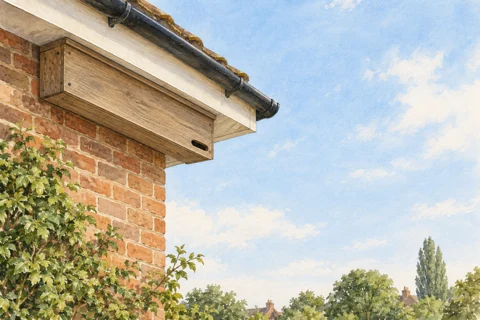
Observe the trees and buildings that local starlings already use. A proposed entrance needs an accessible flight route, and the site should offer shelter without becoming a hidden tunnel through thick foliage. A wide roof overhang or branch can alter the approach in ways that are hard to see in a close-up photograph.
The box and its contents will place a load on the mounting. Choose hardware for the actual product and support, rather than copying the small hook used for a lightweight decorative box. Plan safe access from the outset. If the preferred position is beyond comfortable ground-level work, competent installation help is better than a makeshift arrangement.
Notice activity without investigating
Starlings can make a nesting site quite conspicuous through their comings and goings. That visibility is useful: you can watch from a window instead of looking inside. Record behaviour such as carrying material or returning with food, while accepting that an external view cannot reveal every detail of breeding success.
Do not respond to noisy young by moving the box farther from the house. Its eventual position needs to be acceptable before installation. Discuss this with other household members, especially if the proposed wall is close to a bedroom window or outdoor seating.
Keep the surroundings useful
A nest chamber provides accommodation, not a complete food supply. Accessible grass and varied garden habitat can contribute to the wider setting. Avoid converting all nearby ground to hard surfacing simply to keep the area around the box tidy.
At the end of the season, assess the condition of the box only when it is no longer active. Note loose fittings or water damage for repair, and retain the original plan so replacements do not gradually change the chamber into a different design.