Before you install a swift box
A swift nest site is a building project with a long future. Start with the elevation, access and local advice.
Look up before buying
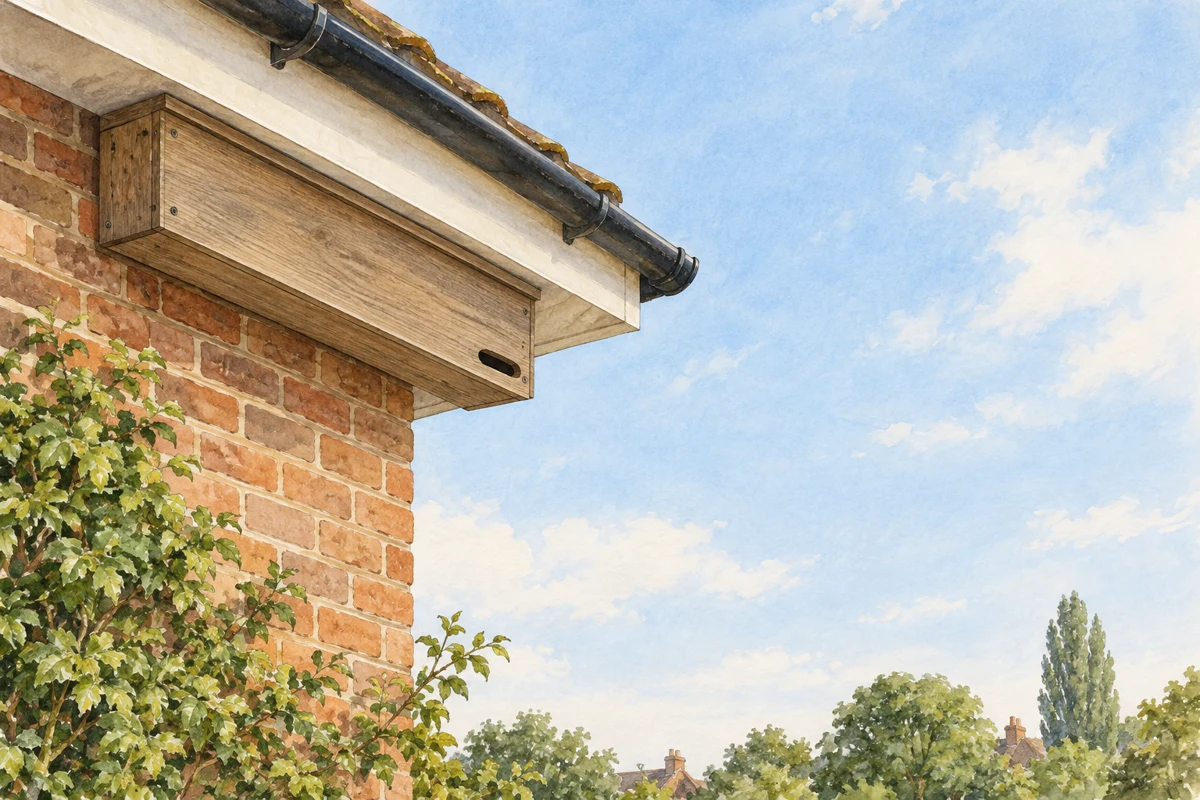
Swift boxes are not ordinary garden nest boxes moved higher up a wall. Their placement needs to suit a bird that approaches a building in flight and relies on an unobstructed route. The wall's exposure, height, nearby structures and clear space below the entrance all deserve attention before a product is chosen.
Take a broad photograph of the proposed elevation, including the roofline, nearby trees and any extension below it. Send that to a local swift group or a specialist organisation such as Swift Conservation if you need help assessing the site. A close photograph of the wall itself hides much of the information they will need.
Choose an installation that can stay
Swifts can return to an established nesting place over successive years. A box fitted where a new conservatory is already planned is therefore a short-term answer to a long-term opportunity. Consider future scaffolding, roof repairs, exterior insulation and replacement guttering before settling on a location.
An external box and an integrated nest brick involve different building decisions. A nest brick must be compatible with the wall construction and detailing. Do not cut into a finished wall or block an existing cavity simply because a product is sold as suitable for swifts. Get advice from the building professional as well as the wildlife specialist.
Shading matters too. A high wall can receive long periods of sunshine even when the garden beneath it is cool. Follow the box's placement guidance, allowing for the hottest part of the day rather than judging exposure on a cloudy visit.
Access is part of the budget
Allow for safe installation equipment and competent help where needed. The price of the box is only part of the project if reaching the eaves requires scaffolding or another access system. A box that cannot be properly secured is not made worthwhile by being inexpensive.
Agree who is responsible for the box in a shared or rented building. Record its location in the property's maintenance information. This is especially useful where a contractor might otherwise seal an opening while repairing nearby roof details.
Be patient about occupancy
Seeing swifts overhead does not mean a new box will be adopted immediately. A suitable site may take several seasons to be found. Local specialists can advise whether attraction methods are appropriate, but playing recordings indiscriminately all day is not a substitute for a suitable site and can affect neighbours.
Other birds may use the space first. Do not remove their nests to reserve it for swifts. An active nest remains a protected nesting site regardless of which species you hoped to attract. Watch from the ground and leave the occupants undisturbed.
An example of a site decision
Suppose the shaded side of a house has a clear upper wall, but a planned balcony will sit immediately below it. The wall may look ideal today while the future flight route will be quite different. Before purchasing, mark both the proposed box and the balcony on the same elevation drawing. A specialist can then assess the finished arrangement rather than approving a photograph that will soon be out of date.
Now compare an alternative under the eaves on another elevation. It may require more expensive access, yet have a stable long-term setting. The choice is not just which wall faces the preferred direction. It includes the prospect of leaving an established site in place, the risk of overheating, and whether the building owner can commit to preserving access during later work.
If neither location is suitable, supporting a coordinated project on another building may be more useful than fitting a box in a compromised position. Ask a local group about existing projects and the permissions involved. A decision not to install on one particular house can be the result of careful planning, rather than a missed opportunity.
Do not apply every tit-box habit
Annual emptying advice for ordinary garden boxes should not automatically be applied to a swift site. Follow specialist guidance for that design and species. Likewise, if an established entrance must be affected by building work, ask for advice well before work begins; replacing it elsewhere on the building may not be equivalent.
Keep a small project record: the box model, installer, photograph of its position and observations of use. If ownership or maintenance responsibility changes, that record can prevent a useful nest place from disappearing through an otherwise routine building job.