Keeping stored bird seed dry
A low price per kilogram is only useful when the seed stays dry and is used during the appropriate season.
Buy to a realistic timescale
A large sack can seem economical until half of it remains when seed feeding pauses. Work backwards from the amount your garden uses during the November–April feeding period. Buying a smaller fresh supply may be more sensible than carrying a partly used sack through a warm shed all summer.
Check the product's storage instructions and date information before ordering. Allow for a feeder that is only partly filled, for changes in visitor numbers and for interruptions caused by illness. A previous winter's consumption is a guide, not a requirement to buy the same amount again.
Choose the place before the container
A sealed bin in a damp, sun-heated shed can still be a poor storage arrangement. Look for a cool, dry place with relatively stable conditions, away from household food and out of reach of pets and rodents. Avoid setting packaging directly on a floor that becomes wet.
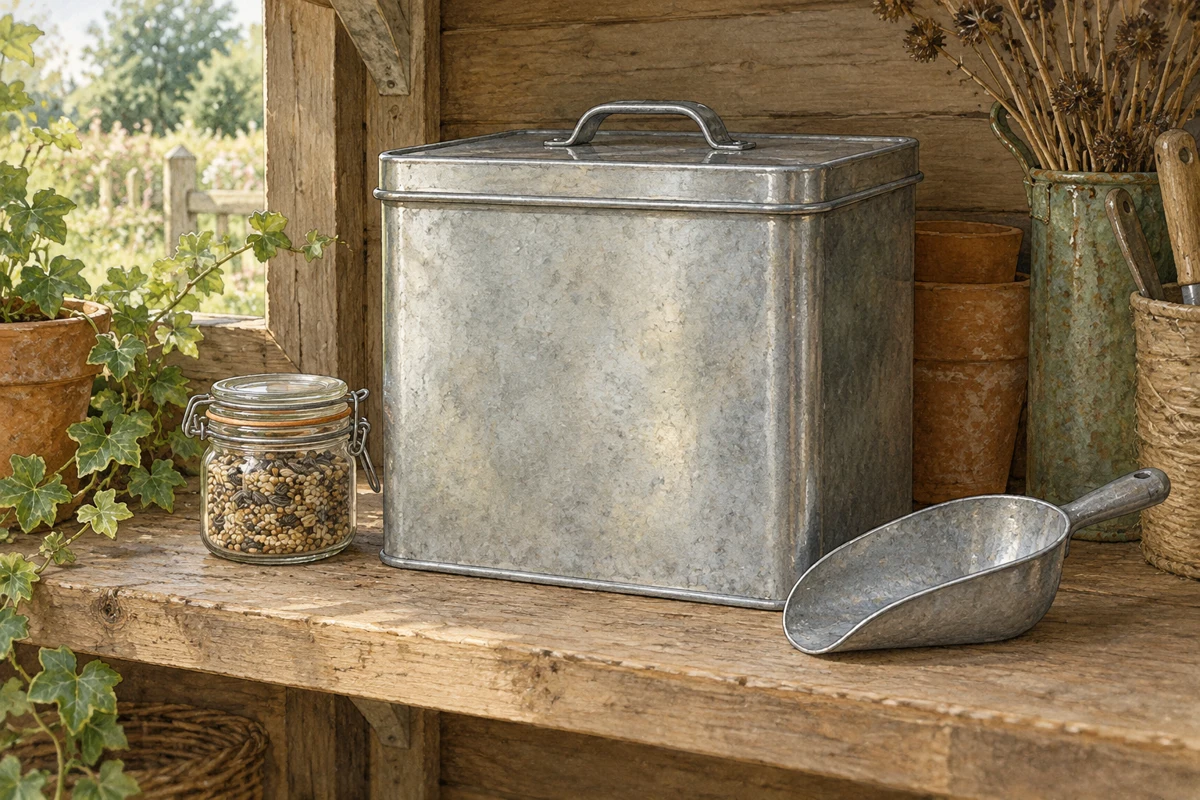
Use a clean, completely dry container suitable for the food. Keep the product label or a photograph of it so the batch and instructions are not lost when decanting. Mark the opening date. Small habits like these make an unexplained change in the contents easier to investigate.
Keep new and old batches separate
Do not repeatedly pour fresh seed onto old residue at the bottom of a bin. Finish or dispose of the earlier batch appropriately, then clean and dry the container before refilling. Mixing dates makes it difficult to know how long any portion has been stored.
Use a dry scoop and return it to a clean place. A scoop left outside in a feeder or washed and put away wet can introduce moisture into otherwise sound food. Close the container after use rather than leaving it open while doing the rest of the garden chores.
Inspect before every refill
Look for damp clumps, an unusual smell, mould or signs of pests. Do not try to rescue questionable seed by blending it into a fresh bag or drying it on a tray for birds. Dispose of spoiled material where wildlife cannot reach it.
If spoilage recurs, investigate the storage conditions and purchase size rather than merely buying another bin. The aim is a small, dependable supply that moves through the routine while fresh, not a stockpile that needs continual checking and salvage.