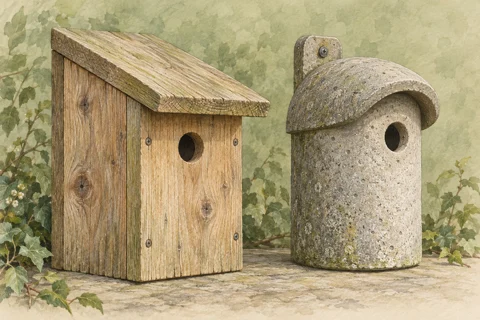
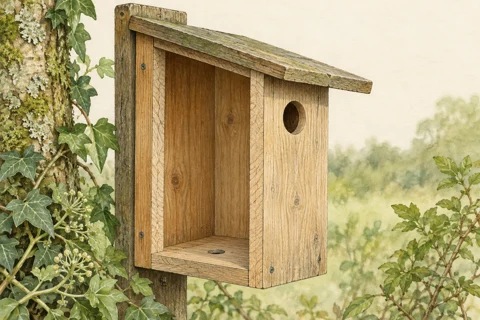
A concealed home for an open-fronted box
An open entrance needs a different setting from a small round hole: concealed, quiet and difficult for predators to approach.
Start with the cover
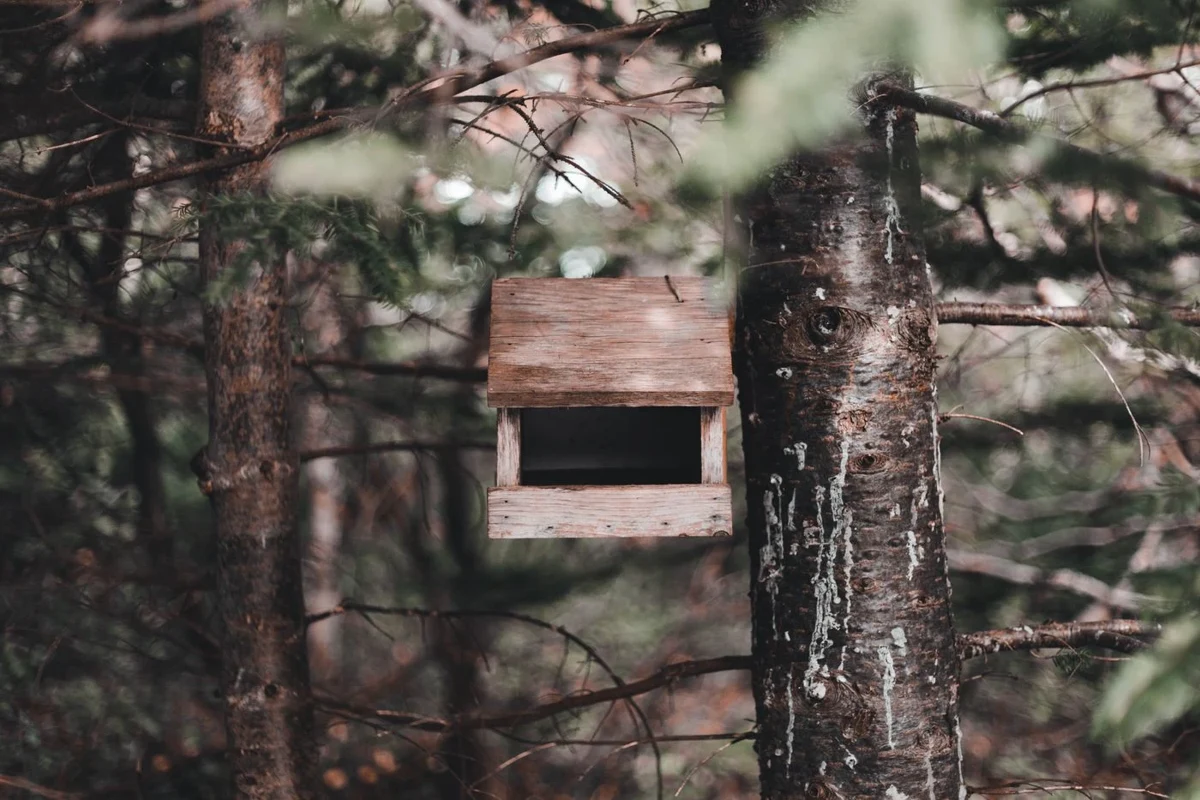
An open-fronted box displayed on the centre of a bare fence may be easy to admire, but that does not make it a good nesting site. Its exposed opening offers little concealment by itself. The surrounding plants have to contribute much of that shelter.
Look for established climbing growth or a dense shrub against a suitable support. The box needs to sit securely within the setting, with an accessible entrance that is not completely packed with stems. This is different from hanging a closed box on an open tree trunk and leaving a clear view of the front.
Match the design to the visitor
Open-fronted boxes can suit birds such as robins, but they are not interchangeable homes for every bird that nests without a round entrance. The depth of the front panel, chamber dimensions and siting should follow a species-specific plan. A robin box and a specialised flycatcher design should not be assumed to work identically.
Before buying, spend a little time noticing which birds already use the garden. A robin regularly disappearing into a shrub is more informative than a decorative label promising a long list of occupants. Even then, the box remains an option the bird may ignore. Existing natural nest sites can be preferable.
Concealment without a climbing route
Dense vegetation needs a second look where cats regularly pass. A concealed box on a broad fence rail may still be readily accessible along that rail. Trace the approach from walls, sheds and garden furniture, rather than looking only at the drop beneath the box. Avoid putting seating or stacked pots directly below the proposed position.
There is no need to cut a viewing window in the foliage so you can see inside. That defeats the purpose of choosing a hidden site and may expose the nesting bird. Watch arrivals from elsewhere in the garden or from indoors, accepting that you will see less of the nest itself.
Plan gardening around the site
Climbers are often tied in, pruned or painted around during spring. Select a location where those jobs can wait if nesting begins. Tell anyone who helps with garden maintenance that the area may be occupied, so a routine tidy does not become an accidental disturbance.
If birds bring material into the box, keep away and let the cover remain intact. An untidy patch around a concealed nest is usually a much better outcome than a perfectly framed view of it.