Timber or woodcrete: comparing box materials
Compare insulation, weight and the way a box will age before deciding between timber and a wood-and-concrete composite.
Pick up the box, not just its photograph
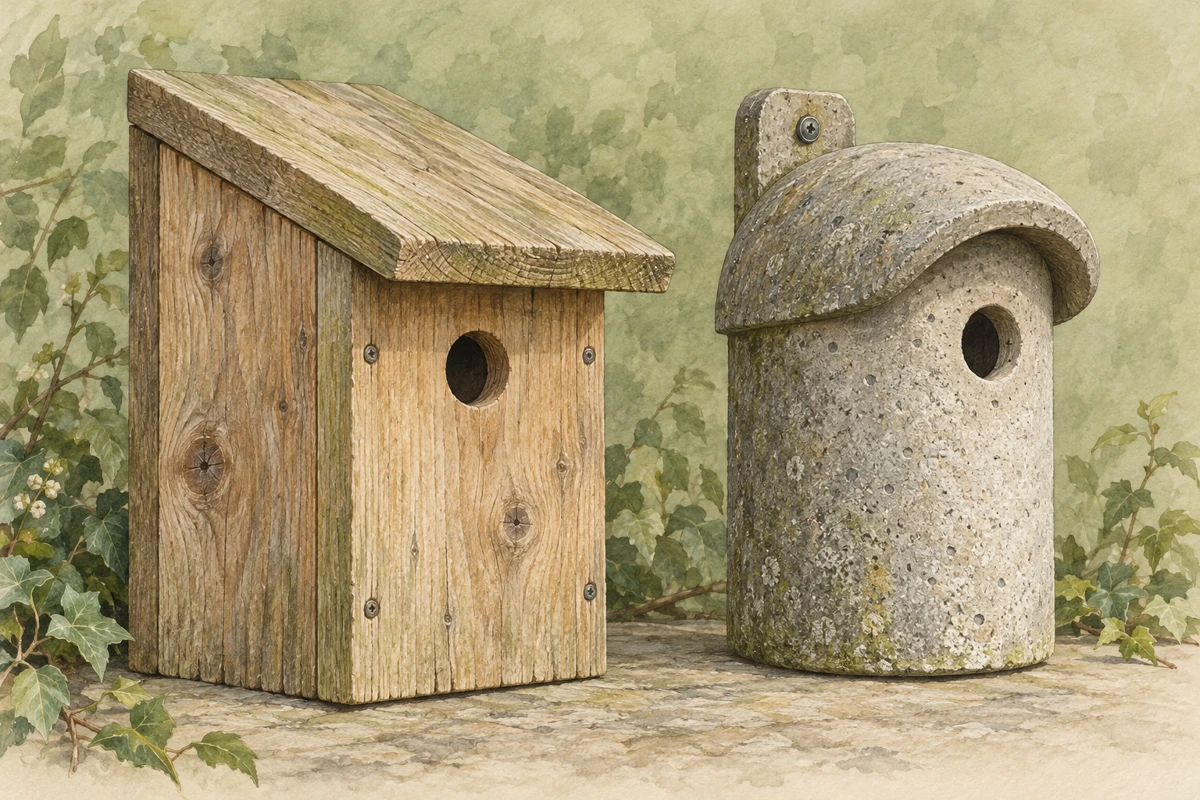
Two boxes with a similar outline can behave very differently when handled. A timber box may be relatively light and straightforward to repair. A woodcrete model can be substantially heavier and may use a particular bracket or hanging system. Neither label tells you everything about the design.
BTO recommends insulating materials such as wood or a wood-and-concrete compound, and advises against thin metal or ceramic nest chambers. The first question is whether the material and construction provide a suitable enclosure, not whether its surface matches the garden furniture.
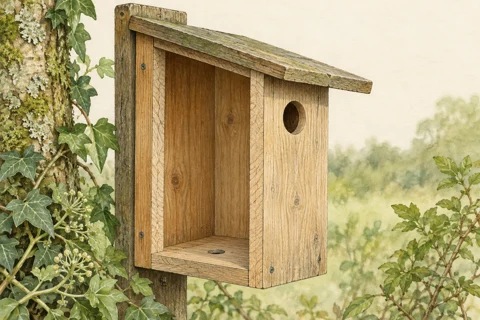
With timber, inspect the details
Look along the joints and under the roof. A board that already has a deep split beside a screw is unlikely to improve outdoors. Check whether the access panel closes squarely and whether water can collect on an exposed flat edge. Sound joinery is more useful than a thick-looking coat of paint hiding the seams.
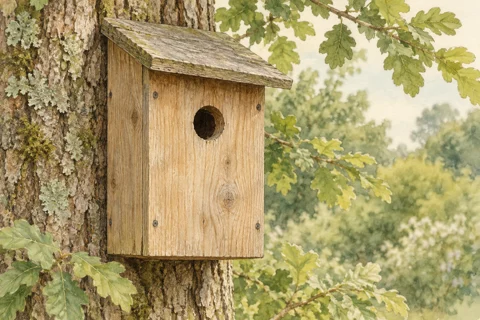
Timber thickness matters for insulation and durability; BTO's buying guidance gives 15 mm as a minimum wall thickness. That measurement does not include decorative trim. If the product description lists only overall dimensions, ask for the wall thickness and internal floor dimensions before ordering.
An unpainted timber surface will weather. A change of colour is not automatically decay, so distinguish harmless greying from soft wood, a loose floor or a failing joint. Repairability can be an advantage if the box is designed to come apart, although repeated patching is not worthwhile once its structure is unsound.
With woodcrete, allow for the load
The weight of a composite box affects both installation and the support beneath it. A small decorative hook that holds a lightweight wooden box is not automatically suitable for a heavier replacement. Follow the manufacturer's fixing instructions and the requirements of the wall or tree mounting system.
Inspect the supplied front panel and fastening arrangement before installation. Some designs have removable fronts rather than lifting roofs. You need to understand how that piece is secured so it cannot be displaced accidentally, and how it can be removed later without dropping it. Store any special fastening tool somewhere identifiable.
Compare like-for-like specifications
Set two product descriptions side by side and list the internal chamber, entrance, weight and maintenance opening. If one description omits a measurement, mark it as unknown rather than treating the outside dimension as an answer. This often reveals that the apparent material comparison is really a comparison between two different designs.
Delivery and replacement parts can also matter. A heavy model with a replaceable front may have a different maintenance cost from a lighter wooden box whose roof can be repaired locally. Ask whether the mounting bracket is included and whether a spare panel can be obtained. These details are particularly useful for a group installing several boxes, because one incompatible spare can make an otherwise simple repair awkward.
Once the functional requirements are met, appearance and price can decide between suitable choices. They should come after the measurements, rather than making the measurements seem optional.
Compare the years ahead
A cheaper box that must be reached by hired access equipment for frequent repairs may not be cheaper over its useful life. Conversely, an expensive long-lived chamber is a poor investment if it is the wrong species design or sits in full summer sun.
Write down the planned site, safe means of access and fixing method before comparing prices. Then judge the complete box: chamber, entrance, roof, drainage and access panel. Material is one important part of that assessment, not a substitute for the rest.