Holly as shelter and a winter food source
Think about shelter, pollination and eventual size before choosing a holly for its berries.
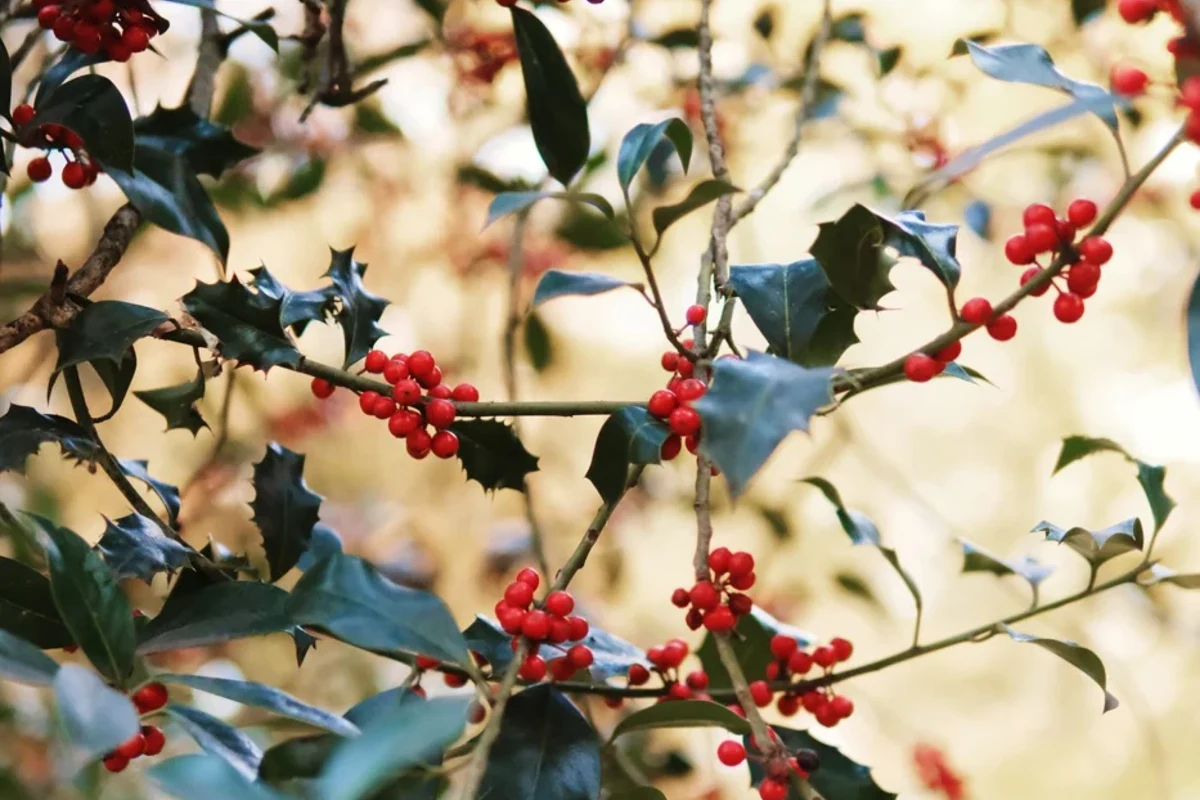
A holly can be useful even in a year when it has few berries. Its evergreen leaves keep a dense outline after nearby deciduous shrubs have become bare, and a sheltered branch can be used very differently from an exposed twig. That makes holly worth considering as structure, not just as a source of Christmas colour.
The British native is Ilex aquifolium. Garden centres also sell many named cultivars and other hollies, so read the label carefully. Names can be misleading when it comes to a plant's sex; do not infer berry production from a name that sounds masculine or feminine.
If berries are part of the plan
Most hollies bear male and female flowers on separate plants, and a female generally needs a compatible male flowering nearby to set fruit. Some named plants are sold as self-fertile. Ask the nursery about the exact cultivar rather than buying two random plants and assuming the problem is solved.
A nearby holly may already provide pollen, but its presence does not guarantee a crop every year. Flowering, weather and the condition of the plant matter. Nor is a berryless young plant necessarily in the wrong place. Keep the label and give it time to establish before diagnosing a failure from one winter.
Fit the plant to the route
Walk the area where the holly will grow. Will its leaves brush past people using a gate? Can the mature spread remain without repeated hard cutting? Can you maintain the plant from a safe position? A small container specimen on display is not a realistic picture of the space a mature tree may require.
Where space is limited, a carefully selected shrub form may be more manageable than a large tree. Growing in a container also creates an ongoing watering and root-space commitment. The pot does not make the plant independent of care simply because it is evergreen.
A useful place to watch
In winter, observe the outside of the holly from a window. Listen before looking into the foliage. Birds may use it as cover between visits elsewhere, so a plant that seems empty during a brief inspection can still have a role in their route.
Leave berries for wildlife rather than bringing all the fruiting branches indoors. They are not a snack for people or pets, and planting decisions should take that into account. If maintenance becomes necessary, check for nesting birds and plan the work so the plant's shelter is not removed all at once without reason.