Keeping part of the garden dark
Light the route people need, and leave the habitat beyond it dark.
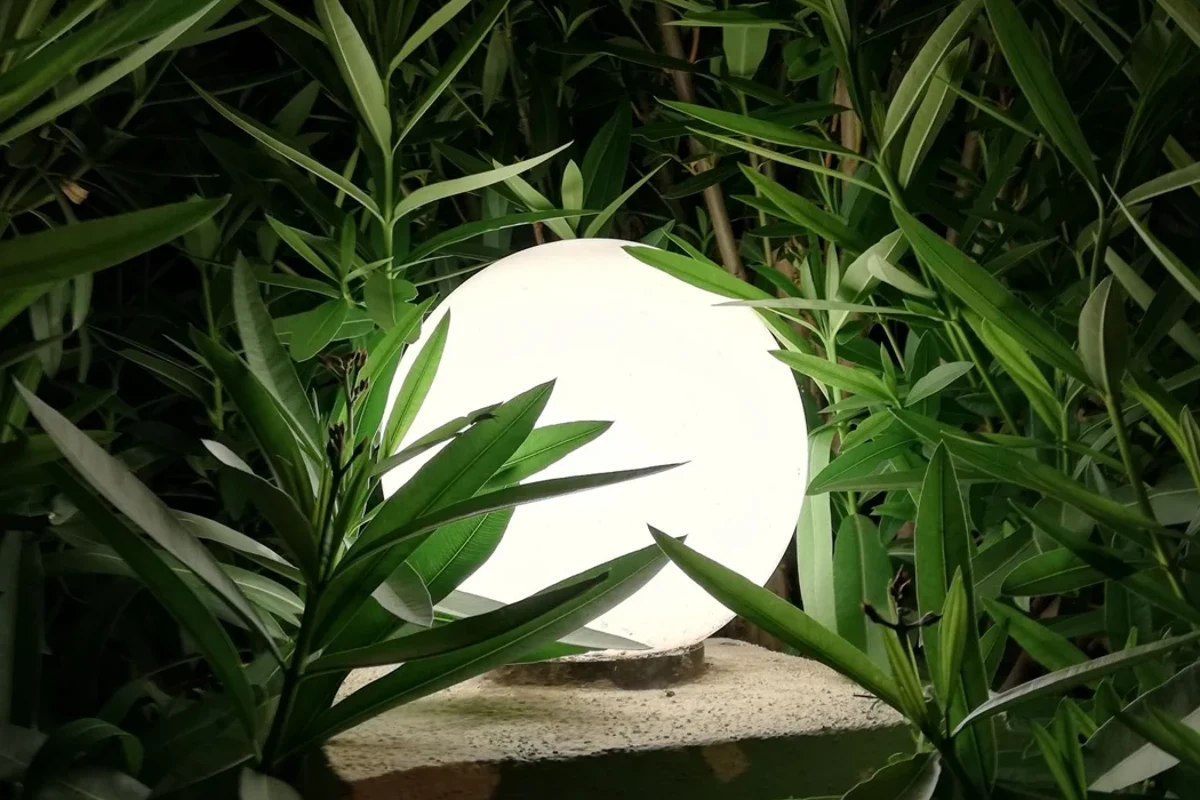
A garden can be planted for wildlife by day and brightly illuminated all night. The two decisions are often made separately: plants are chosen for birds and insects, while lighting is chosen for the view from the house. Looking at them together may reveal that a useful hedge or tree is under an unnecessary spotlight.
You do not have to make essential access unsafe. Begin by identifying which surfaces people need to see: a step, a gate latch or a short route to a door. That is a more precise brief than lighting the whole garden because darkness feels unfinished.
Walk the route after dark
From a safe position, notice where existing lights spill beyond the path. A fitting can illuminate a doorway while also shining into a tree canopy or a neighbour's window. Shielding, direction and operating time all matter, not just brightness.
The Bat Conservation Trust advises retaining dark areas and avoiding illumination of wildlife routes. The wider lesson for a garden is to keep some connected cover free from unnecessary light. A dark patch isolated between several bright lamps is different from an unlit boundary that continues into neighbouring vegetation.
Use controls for a purpose
Where suitable, timers or correctly adjusted motion controls can reduce the time a light remains on. Check that a sensor does not activate constantly because a branch moves in the wind. A system that flicks on throughout the night may be operating very differently from what you intended.
Choose fittings and settings appropriate to the site, and have electrical work carried out safely by a qualified person where required. Do not modify outdoor wiring or cover a hot fitting with an improvised shield. The objective is a better lighting plan, not a hazardous workaround.
Leave decorative lighting optional
Before adding a permanent string of lights through a shrub, ask whether it needs to run every evening. Turning decorative lighting off when nobody is using the garden is a simple change. Avoid illuminating nest boxes or suspected roosting places to improve the view.
After adjustments, observe the garden from indoors without adding a torch beam. You may notice how much light still comes from the house itself. Curtains or blinds can reduce that spill while making indoor reflections less distracting for your own view. A quieter night-time garden does not need to become another spectacle; it can simply be allowed to remain dark.