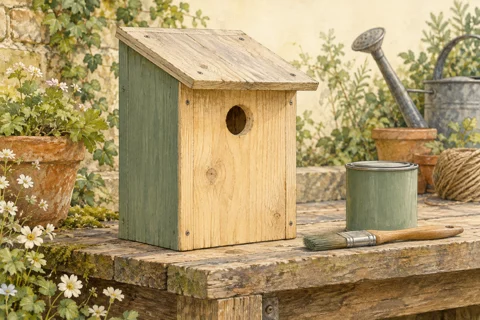
What an entrance plate can and cannot do
A metal ring can protect an entrance rim, but it cannot make the entire box secure against every predator.
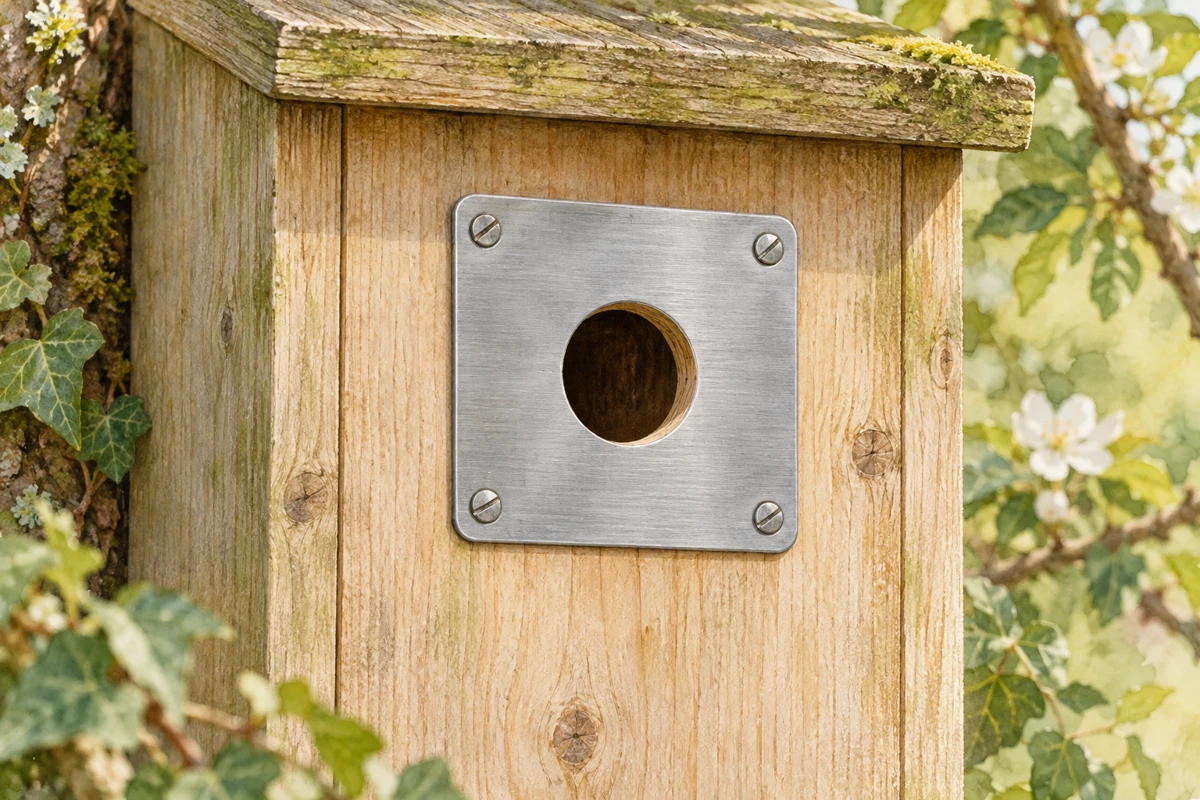
What the plate protects
An entrance plate is usually fitted around the round opening of a wooden box. Its immediate purpose is to protect that rim from being enlarged. It does not reinforce the roof, floor or every side panel, and it does not remove climbing routes in the surrounding garden.
Choose a plate made for the intended entrance size and box design. A very small hole is not an upgrade merely because it excludes more animals; it can also exclude the birds the chamber was designed for. Check the manufacturer or the species plan rather than selecting the smallest available option.
Fit it flush before installation
Work on an empty box at ground level. Align the openings accurately so the timber does not partly obstruct the plate's hole. Check for a sharp rim, raised corner or burr before fixing it. Hardware must not leave points projecting into the interior.
The plate should sit securely against sound wood. If the front is already cracked or soft, adding metal can conceal rather than repair the defect. Replace the damaged panel to the original specification or replace the box if its wider structure is failing.
Review the rest of the site
Look at nearby shelves, fences and branches. A cat able to stand immediately beside the entrance presents a siting issue that a small metal ring does not solve. Likewise, a lid that can lift or a loose front panel needs its own attention.
Avoid adding improvised spikes, sticky substances or entangling materials around the box. These can harm birds and other animals. If a particular predator problem persists, seek advice on suitable box construction and placement rather than escalating homemade barriers.
Leave breeding birds undisturbed
Do not fit a plate while the box is in use, even if a bird has been pecking around the opening. Pecking does not by itself prove that an urgent repair is required. Observe from a distance and seek advice if there is an immediate welfare concern.
For ordinary improvements, keep a note for the inactive season. When the work is eventually done, photograph the finished front and record the aperture size. That makes later checks easier and helps prevent a replacement plate with the wrong opening being fitted by mistake.