Bird habitat in a paved courtyard
Use the walls and planting spaces without filling every inch of the floor.
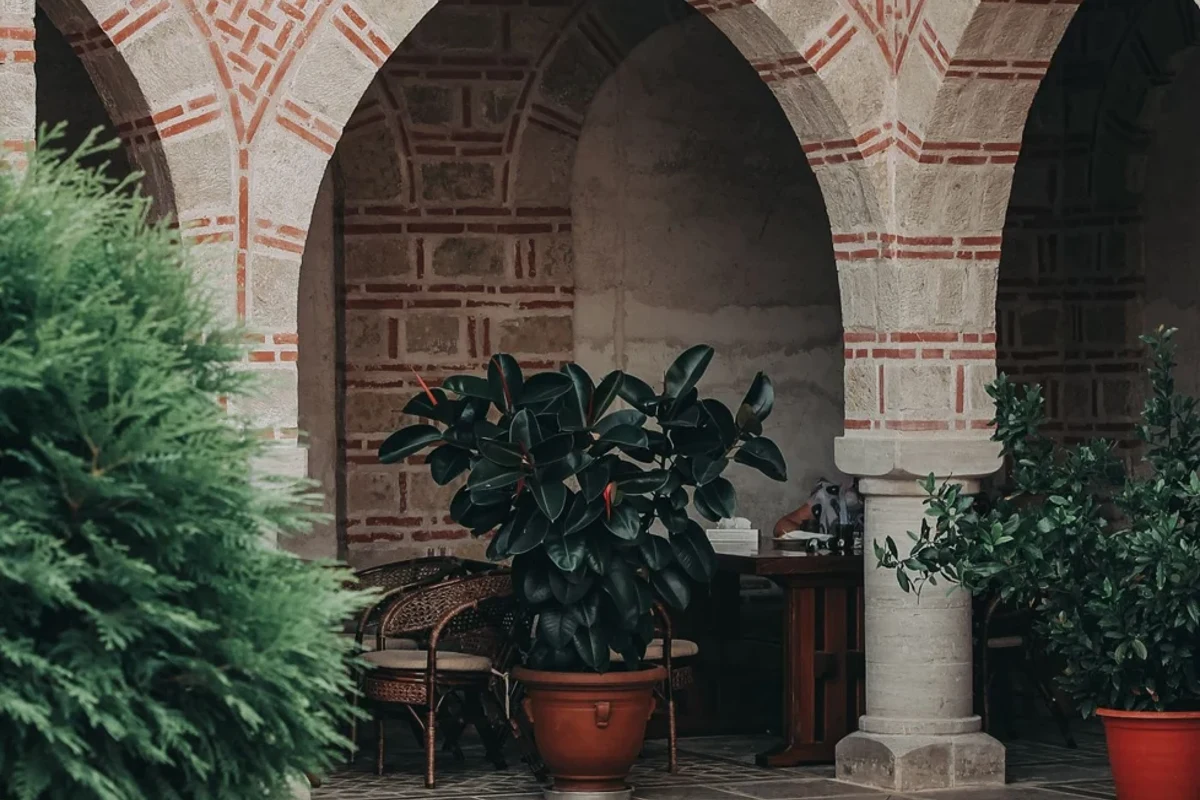
A paved courtyard can feel separate from the surrounding habitat, especially when high walls hide neighbouring gardens. Birds, however, can use routes above those walls. Your starting point is to notice where they already pass and what kind of cover the space can support.
Do not begin by buying several feeders. A small enclosed area can concentrate birds and make waste harder to manage. Planting that suits the light, along with a quiet place to observe, may be a more useful first change.
Read the light over a day
A courtyard can contain both a hot reflected corner and a permanently shaded wall. Take notes at different times rather than choosing plants from the midday view alone. The right plant for one side may fail a few steps away.
Consider a climber on a sound support, a manageable shrub in a suitable large container or a planted strip where soil is available. Check the eventual size and watering needs. Tall containers and supports must be stable, and any wall fixing should be appropriate to the structure and permitted by the owner.
Keep a route through the space
Leave room for carrying shopping, opening doors and maintaining the plants. A courtyard packed tightly with pots can be difficult to clean and awkward for anyone with limited mobility. Fewer well-positioned plants may offer more lasting value than a dense display that has to be dismantled each season.
Look for reflective glass and garden mirrors before attracting birds towards them. A mirror designed to make a courtyard appear larger can also suggest a route that does not exist. Remove or reposition misleading features, or use an appropriate solution that makes the surface visible.
Observe the upper edge
A bird on the wall may be checking the space rather than intending to land inside it. Stay still and let it decide. Do not repeatedly move pots, food or water to coax it closer. The courtyard's usefulness may grow as plants establish and the birds become familiar with its structure.
Keep notes on the surrounding routes too. A tree beyond the boundary may explain visits better than anything within the courtyard. Small gardens work as parts of a larger landscape. You can improve your section without expecting it to provide every resource a bird needs.