Finding a sheltered position for a nest box
A compass direction is only part of the decision. Follow the shade, rain and everyday traffic around the proposed site.
Watch the wall before choosing it
A bare wall can look sheltered in January and become a heat trap in June. Before putting up a nest box, look at the proposed position at different times of day. Think ahead to the period when leaves appear and the sun is higher. A photograph taken from the same window can help you compare the changing shadow without repeatedly walking under the site.
North or east is often suggested as a starting point for a small hole-fronted box, but the actual exposure matters more than the compass alone. A north-facing corner funnelled by strong wind may be less suitable than another shaded, quieter position. Look for protection from hard rain and prolonged hot sunshine, with room for the bird to approach.
See the approach as a bird would
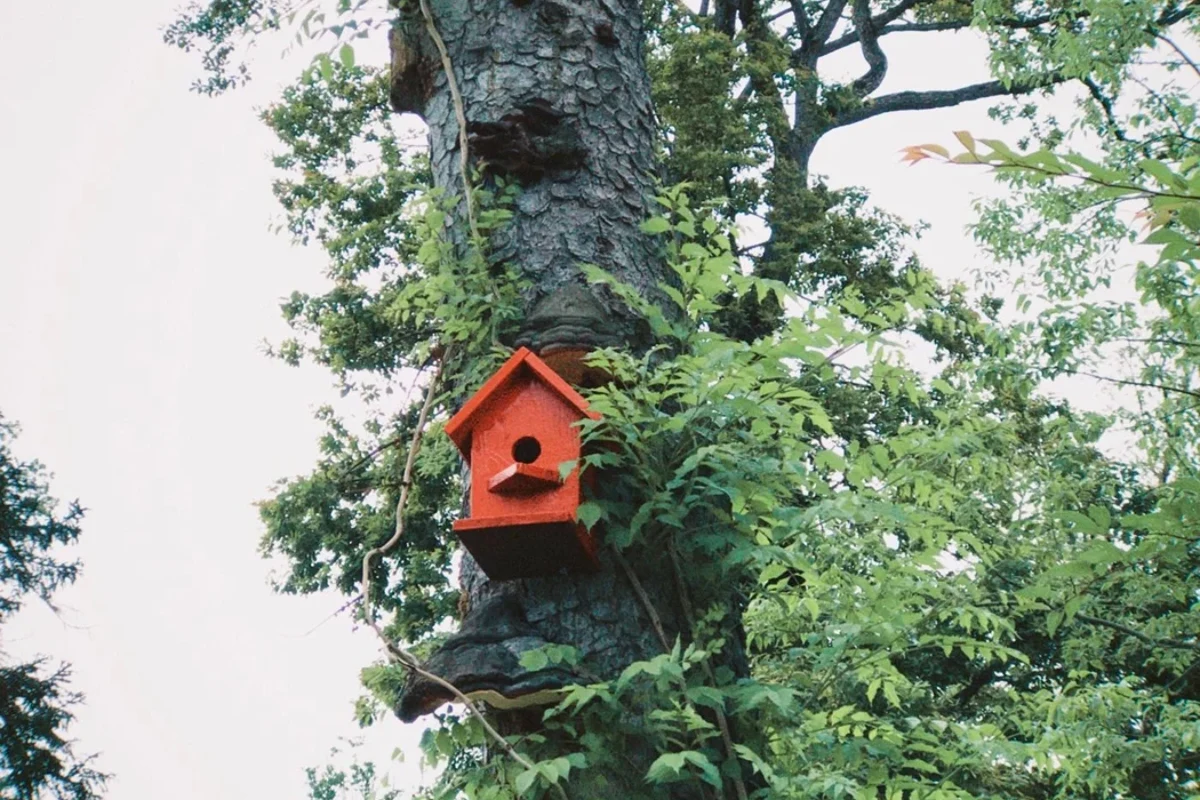
Stand back and trace a route from nearby cover to the entrance. The opening should not disappear behind leaves as a climber grows. Equally, clearing a broad swathe of vegetation simply to make the box more visible to people can remove the cover that made the garden attractive. Choose a position that needs little intervention during spring.
A gate, washing line and children's play area can all seem unobtrusive while unused. Picture the busiest ordinary day. A box just above a frequently opened door may receive repeated close approaches even in an otherwise quiet garden. A feeder beside it adds a different kind of traffic. Keep the nesting area apart from that feeding activity.
Check nearby ledges and fence tops too. A high box is not necessarily difficult for a cat to reach if a broad shelf sits alongside it. Height should be considered together with access routes and the requirements of the intended species, rather than used as a single safety measure.
Decide how it will be maintained
The installation must be secure and the later maintenance realistic. If accessing the chosen position requires leaning over a conservatory, find a safer site or arrange competent help. Do not choose an awkward location on the assumption that somebody will solve the access problem next autumn.
Once installed, observe from a distance. A box may remain unused even in a sensible position, and that alone is not a reason to keep moving it. Record the exposure and any visits for a season. Alterations belong in a later period when the box is definitely inactive, not while birds are assessing or occupying it.