Watching magpies without the myths
Observe the action in front of you without turning a familiar bird into a character from a story.
Black and white, until it turns
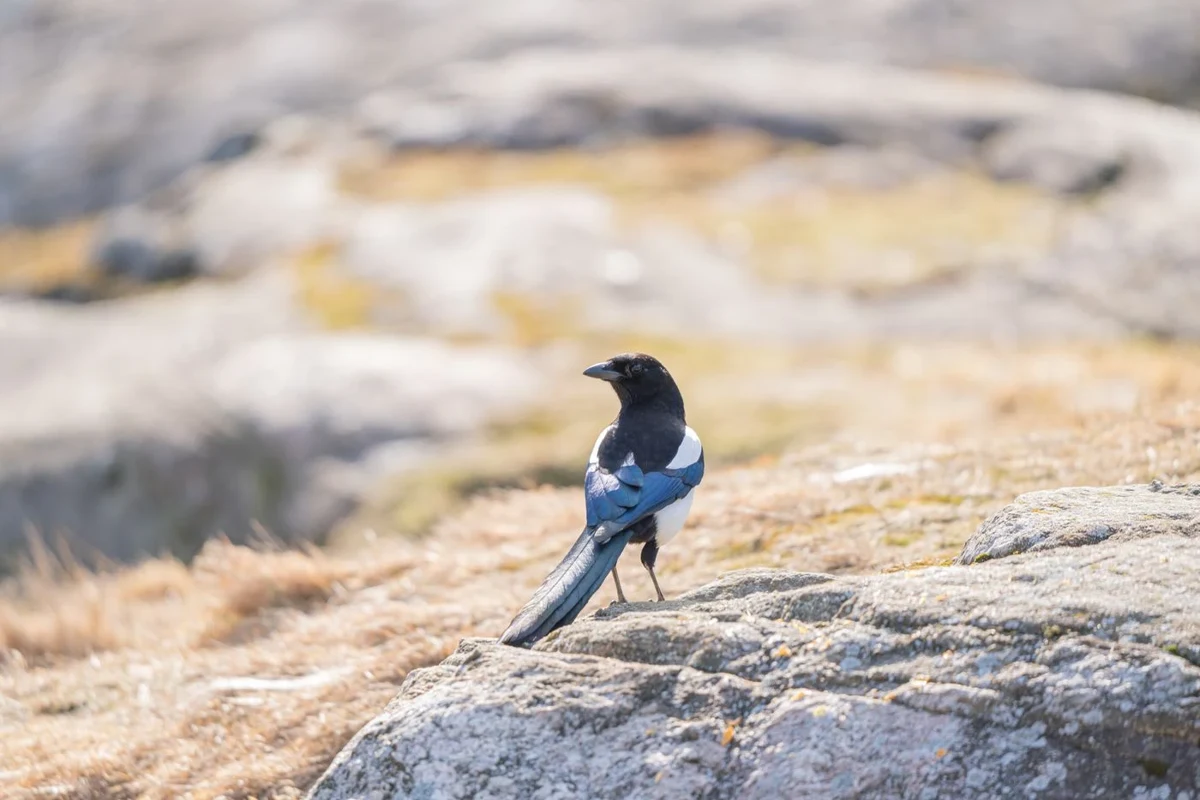
A magpie's long tail and contrasting body make it easy to recognise. In good light, the apparently black wings and tail can show blue-green sheen. Watch the colour change as the bird turns. A photograph taken a moment later may record a very different appearance without either view being wrong.
The tail is especially useful at a distance, but a young bird can have shorter-looking proportions. Position also changes the silhouette: a tail pointing towards you appears much shorter than one seen side-on. Wait for movement before judging a strange outline.
Describe what happened
Magpies attract stories about cunning, theft and bad luck. A notebook is more useful when it records actions. If a bird carries something into a hedge, note the object's appearance and the route. Unless you saw what happened next, you do not know whether it was eaten, stored, dropped or used in a nest.
Their varied diet includes both plant and animal material. Predation can be uncomfortable to witness, but one event does not explain the success or failure of all other birds in a garden. Keep separate observations separate. A nest disappearing and a magpie being present nearby do not establish a cause by themselves.
This is a useful exercise for children too: replace a word such as naughty with a description of the movement. It often produces a more interesting question about what the bird was doing.
Watch the ground and the branches
A magpie searching a lawn offers a different view from one calling in a tree. Notice pauses, direction changes and responses to other birds. If a group is present, avoid assuming that every bird is part of one family. You can record social behaviour without knowing the relationships.
Keep your distance from any nest or repeated nesting route. Do not attempt to remove or disturb a nest to favour other garden birds. Habitat with dense cover gives smaller birds options without requiring you to manage individual encounters.
A short observation can end simply with the bird leaving over a roof. Write down the details while they are fresh: the changing sheen, the object carried or the direction of flight. They tell you more than a familiar rhyme ever will.