The woodpecker that searches the lawn
The bird investigating the grass may be a woodpecker, even when it spends little time pecking at trees.
Look across the lawn
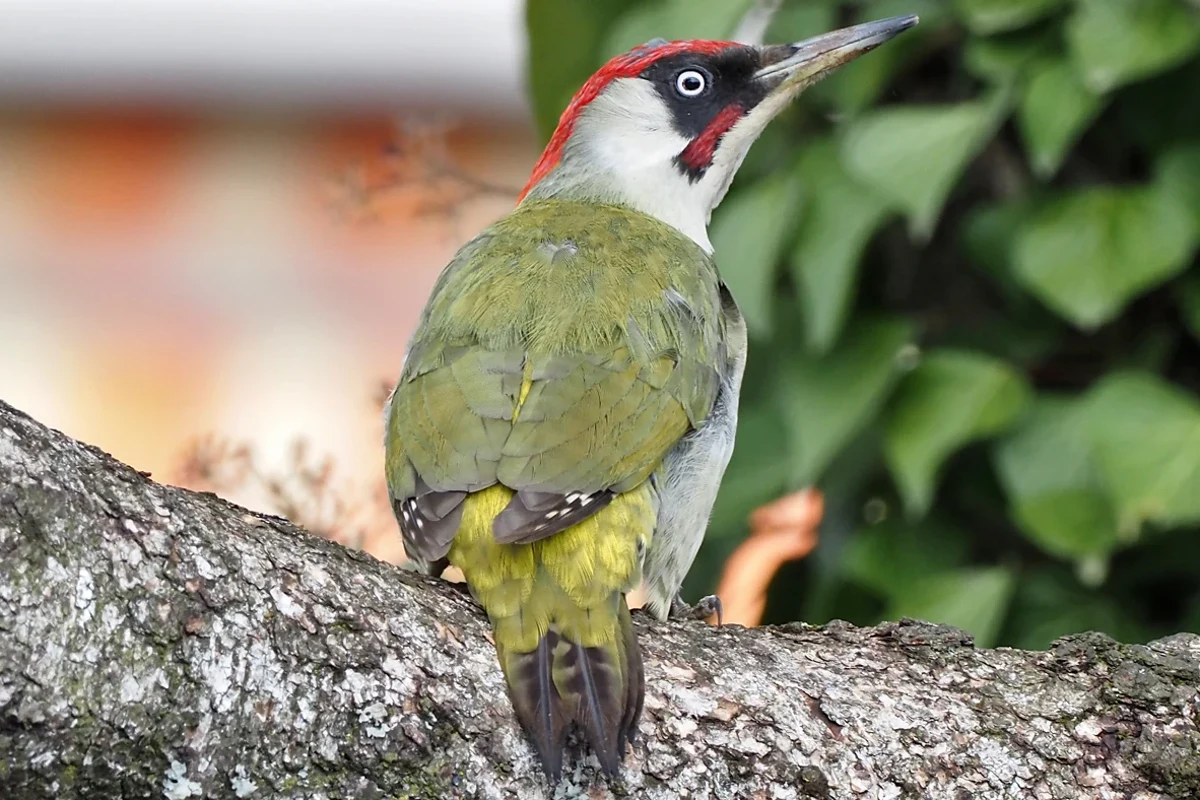
A green woodpecker on the ground can disappear surprisingly well against grass. Watch for movement and a raised head rather than expecting a bird attached to a trunk. Its green upperparts, red crown and sturdy bill become clearer when it pauses. A bright yellow rump can flash as it flies away.
The laughing call is often the first clue that one is nearby. Learn it from a reference recording, but do not play it outside to provoke a reply. Hearing the call from somewhere beyond the garden is still a useful observation, even if the bird never enters view.
The ground is a feeding place
Green woodpeckers feed heavily on ants, which helps explain their interest in lawns and other open grassy areas. Watch the area being investigated without assuming every hole in the lawn was made by the bird. Several animals and ordinary soil processes can leave similar-looking marks.
A useful note describes a sequence: bird paused, probed one patch, then moved a short distance. If you cannot see what it swallowed, leave that detail open. The known diet provides context, not proof of the contents of a particular mouthful.
Avoid approaching across the lawn for a closer picture. A window or a distant seated position may allow the bird to continue searching. If it lifts its head repeatedly and stops feeding as you move, give it more room.
Age and place help interpret the view
Young green woodpeckers are more heavily marked than adults. A spotted-looking body does not rule the species out. Check the shape, red crown and green tones together, using a guide that shows juveniles. The species is not evenly distributed throughout the UK, so a local record also needs to fit the regional context.
If the visit is brief, write down the departure view. The yellow rump and undulating flight may provide details the ground view concealed. A rough sketch of the outline is often more useful than an enlarged image containing only green grass.
Enjoy the bird where it chose to feed. Following it towards a possible nesting tree adds disturbance without improving the lawn observation. Its exact home need not become part of the record.