Learning one bird sound at a time
Start with a visible singer and one repeatable feature of its sound.
Choose one voice
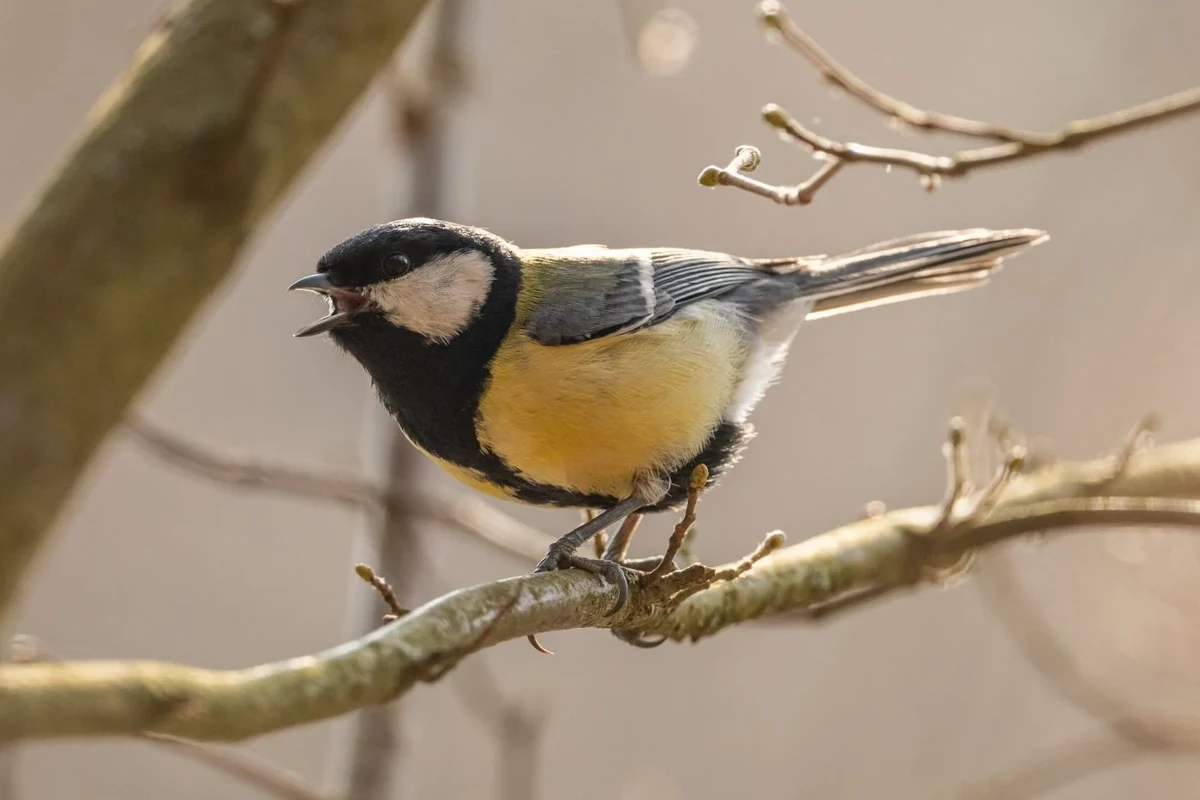
A full spring chorus can be a poor place to begin memorising birdsong. There are too many overlapping voices and too few clear pauses. Choose one familiar bird that you can actually see singing. A robin on a fence or a blackbird on a roof can provide the link between appearance and sound that a recording alone cannot.
Check that the bird's bill movements coincide with the sound. Another singer may be hidden nearby. Once you are sure, listen for a small number of features: the length of a phrase, whether it repeats, and whether the notes feel smooth, harsh or trilled. These are easier to retain than an entire performance.
Give yourself a short task
For one watch, concentrate only on rhythm. For another, listen to how a phrase ends. Breaking the task down reduces the pressure to name every sound at once. Write your own description immediately, even if it seems unmusical. A note such as three repeated phrases then a pause can be enough to recognise the pattern later.
Reference recordings are useful after the encounter. Listen indoors or through headphones, away from birds that might respond. Compare more than one example if available, because a species can have several songs and calls. A perfect match to one recording is not the only valid route to identification.
Treat automatic suggestions as leads
A sound-identification app can draw attention to a voice you missed, but it can also be confused by noise, overlapping birds or mimicry. Keep the recording and look for supporting evidence. An app label should not become a confirmed survey record simply because it appeared with a confidence graphic.
Write heard only when you did not see the bird, and uncertain when you could not resolve the identification. These labels preserve useful information. Guessing a name removes that honesty and makes later learning harder.
Learn the ordinary variations
The same bird may sing, call to another bird or give an alarm sound. Do not assume a new sound means a new species. Once one common song becomes familiar, expand to another voice or another type of call from the same bird.
If birds begin calling urgently while you approach, move away instead of waiting for a better recording. Learning a sound is not a reason to prolong disturbance. A few minutes of ordinary, undisturbed singing provides a better lesson than a response you caused yourself.
Build a small reference set
Rather than accumulating dozens of recordings, keep a handful that you have linked confidently to visible local birds. Label each with the species, date and a short description of the sound. A blackbird song and a blackbird alarm call should not share an unexplained filename. Your own small set becomes a record of sounds you actually encounter, not a catalogue of everything that might occur.
Review one pair of confusing sounds at a time. Listen for a structural difference you can describe, then return outdoors on another occasion and see whether it helps. If it does not, change the description rather than forcing every new sound to fit.
Hearing also varies between people, and high-pitched calls may be difficult for some listeners. Use visible behaviour and companions' descriptions where helpful. An inaccessible frequency is not a failure of attention, and birdwatching does not require equal ability to hear every species.